



When I was in junior high and high school in Statesville, North Carolina, in the 1970s, our cable lineup carried the Charlotte stations down US Highway 21. The big network affiliates were there, the way they were anywhere. And then there was one a bit further down the dial that did not act like the rest. Channel 36 was WRET-TV, an independent UHF station that ran old movies, syndicated reruns, and whatever else the owner could lay his hands on. The owner had bought it in 1970 and named it after his own initials. Robert Edward Turner. We did not call him Ted yet. He was just some guy in Atlanta who had recently picked up a struggling Charlotte station on the cheap.
We were watching, though we did not know it, the start of something that would rewire American television. In 1975, ABC, CBS, NBC, and public TV were the prime time universe. The Big Three ran the country’s living rooms. Cable television in my hometown of twenty-five thousand people reached a few miles into the surrounding communities and pulled down the Charlotte signals, and that was about as exotic as television got. But on Channel 36, Ted Turner was already running an experiment. And in Atlanta, on his other UHF station, he was running another one. They would converge in a way that built CNN, built TNT Sports, and put the Atlanta Braves into living rooms that would adopt the Major League Baseball team from Georgia.
From WJRJ to WTCG: How Ted Turner Built His UHF Empire
Turner’s first move was buying WJRJ-TV, a struggling independent UHF station in Atlanta, in January 1970. He renamed the corporate parent Turner Communications Group, and the station became WTCG. The “G” stood for the company. It also stood for “Watch This Channel Grow,” which was the kind of corny promotional line Turner loved and absolutely meant. Later that same year, he picked up the Charlotte station, which had previously broadcast as a religious outlet under the call letters WCTU, and rechristened it WRET to match his own initials.
The 1972 On-Air Plea That Saved WRET-TV in Charlotte
The Charlotte experiment did not start well. By 1972, WRET was failing badly. Turner himself appeared on-air on his own station, asking viewers in the Carolinas to send in contributions to keep the lights on. A station owner pleading for donations was not normal television behavior in 1972. The audacity of it said everything about Ted Turner. He was not above asking for help, and he was not above making a public spectacle out of doing so. Three years later, in 1975, the station was not just back from the brink. It had become one of the most-watched independent stations in the country. And in 1976, Turner did something most businessmen would never do. He sent every one of those 1972 contributors a check returning their money, with interest. That was Ted Turner.
Why Ted Turner Bought the Atlanta Braves in 1976
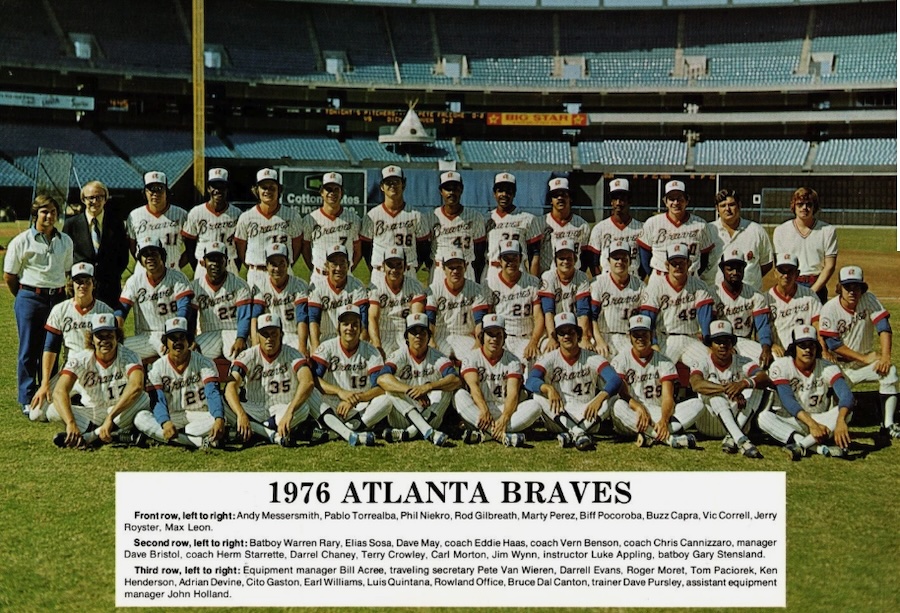
That same year, in January 1976, he bought the Atlanta Braves. The team was a National League afterthought at that point, fresh off losing seasons and thin crowds in a half-empty stadium. Most owners would have bought the Braves to make money on tickets. Turner bought them to put the product on his own television station. He had the rights, he had the airtime, and now he had a Major League Baseball team that he could broadcast all summer long, every night, without cutting a deal with any network in New York.
December 17, 1976: The Day WTCG Became a Cable Superstation
A milestone day. On December 17, 1976, Turner started uplinking WTCG’s signal to a satellite. Cable systems across the country could now pull the channel down for almost nothing and offer it to their subscribers. The Atlanta Braves stopped being a regional curiosity. By the late 1970s, kids in Tulsa, Spokane, and yes, Statesville, were watching Braves games on their parents’ brand new cable boxes. A team that nobody outside Georgia had cared much about became, in Turner’s own words, “America’s Team.” It was a marketing line, and it was also true. Dale Murphy and Bob Horner had fans in Vermont. Phil Niekro’s knuckleball was causing double takes in Pasadena.
The Sale of WRET-TV and the Rise of the Turner Broadcasting System
In 1978, WRET-TV in Charlotte stopped being an independent and became the city’s NBC affiliate. A year later, in 1979, Turner sold it. By then, he had moved on. WTCG in Atlanta had been renamed WTBS, the Turner Broadcasting System. He had bigger plans, and Charlotte had served its purpose, with the proceeds helping to fund these future objectives. He had taken a flailing UHF station, kept it alive with the help of viewers in 1972, made it profitable, made it valuable enough to sell to NBC, and walked away with proof of concept.
How CNN and TNT Sports Grew From the UHF Blueprint
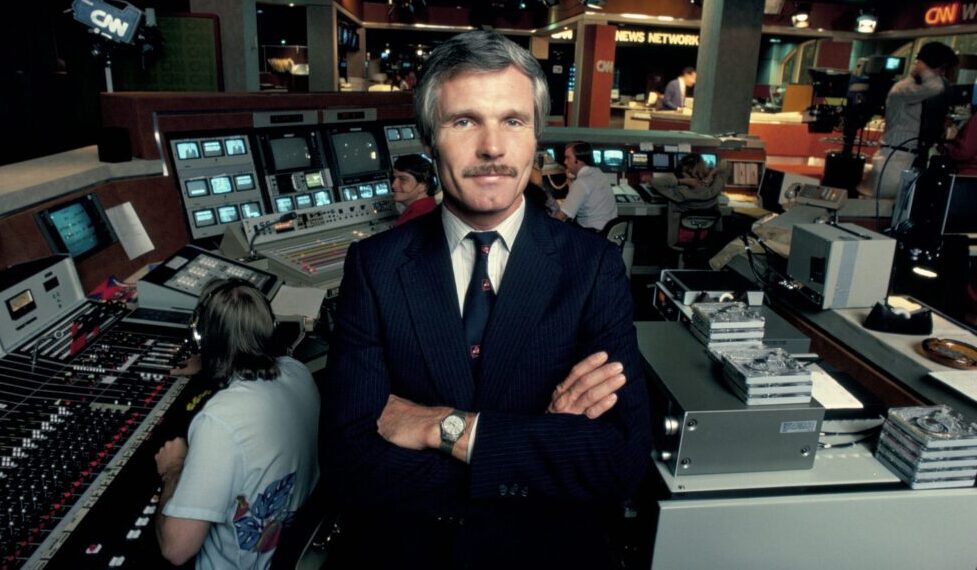
The proof of concept was this. Build something the audience actually wants, deliver it on a platform, and the audience will find you. On June 1, 1980, the Cable News Network signed on the air. CNN was the first 24-hour news channel in history, and most of the media establishment laughed at it. The Big Three networks were doing thirty-minute evening newscasts and were not about to give up their hold on Walter Cronkite’s audience. Turner, never one to underplay his hand, declared that CNN would not sign off “until the world ends.” Eight years later, in October 1988, he launched TNT, which would build itself into a sports juggernaut by carrying NBA broadcasts, NASCAR races, and major golf tournaments. Both CNN and TNT made sense to Turner because he had already proven the model. Twice. Once in Charlotte, once in Atlanta.
Why Ted Turner Saw the Future of Cable Before the Big Three Networks
The lesson Turner understood ahead of almost everyone else in television was simple. The Big Three had built an empire on scarcity. There were only so many channels, only so many time slots, only so many advertisers, and the gatekeepers in New York controlled all of it. Cable changed the math. Suddenly, there were forty channels, then a hundred, then a thousand. The people who would win were not the ones who held tightest to the old model. The winners would be the ones who saw that the audience would follow whoever delivered something worth watching.
Turner saw it from a UHF station in Atlanta and a sister station in Charlotte. The kid in small town Statesville, NC, turning the dial to Channel 36 in 1975, who had no real idea what he was watching, would within a few years be watching the Braves, his favorite news, and his college basketball on channels that did not exist when junior high started.
And it all traces back to two struggling UHF stations in the South, and a yacht racer from Savannah who saw the future first.

