





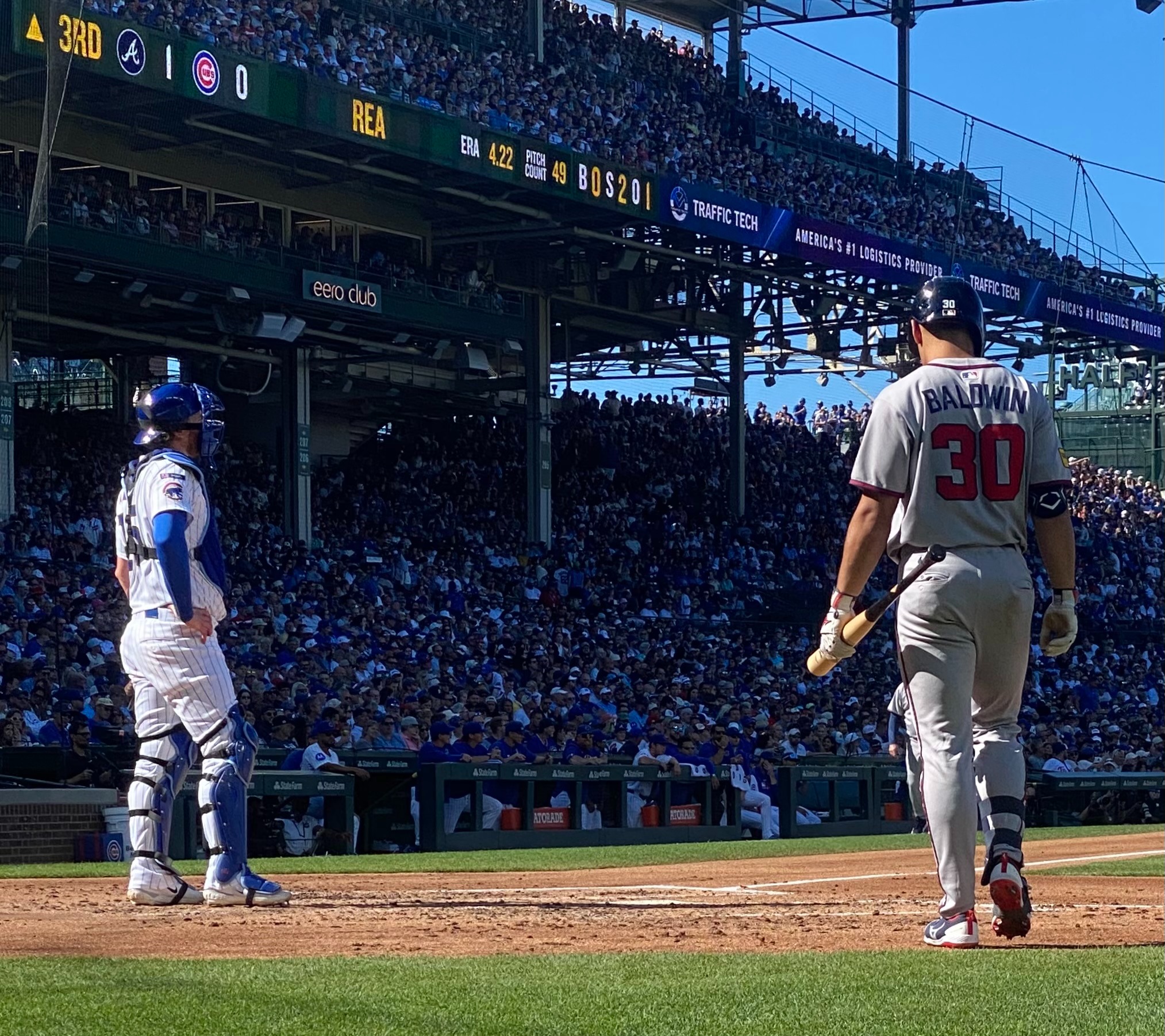
CHICAGO—Drake Baldwin dug into the left-handed batter’s box at Wrigley Field down 0-2 in the top of the ninth. He turned on an inside fastball and drove it into the right-field basket, a two-run homer for the Atlanta Braves that would hand the Milwaukee Brewers their fourth consecutive NL Central title.
Fittingly, the kid from Madison, Wisconsin, was back in Chicago, playing a Major League game just a few hours from where he grew up. The same player who once spent summer nights at the Madison Mallards’ Duck Pond was now wearing an Atlanta Braves uniform, standing in one of baseball’s most recognizable stadiums and adding another home run to a budding career that has moved remarkably fast.
“I went to a game when I was a kid here (Wrigley Field),” Baldwin said. “It was really cool playing here; awesome atmosphere.”
Although this game carried another layer for Baldwin’s friends and family.
“I was a Packers and Brewers fan, ” Baldwin said. “Now I’m a Braves guy is the best way to put it. I think it’s cool being close to home. It’s more my relatives and buddies who are excited that we beat the Cubs, rather than me, so it feels like another game.”
The moment encapsulated how far Baldwin has traveled, from Madison West High School, where he was a standout baseball and hockey star, through the Northwoods League, Missouri State and eventually to the Major Leagues.
The path was never a straight line.
It ran through hockey rinks, college ballparks, long bus rides, minor-league promotions, injuries, constant adjustment and the people who kept showing up along the way.
For all the numbers, awards and accolades, Baldwin’s story remains remarkably connected to home. At the center of it all is a kid from Madison who never seemed particularly interested in acting like he was destined for anything.
Baldwin simply kept working.
The person behind the player
Long before Baldwin caught Major League pitchers, he was catching bullpens for Madison West.
Before he stood beside his mother on an All-Star red carpet, his mother, Bridgette Baldwin, drove him to tournaments and announced his varsity baseball games.
Dr. Baldwin has been a constant throughout her son’s journey. An educator in the Madison area, she helped guide Baldwin through childhood and his athletic and academic careers.
Baldwin is an only child who grew up with his mother and his maternal grandparents on Madison’s West Side. His mother was there for the moments that mattered long before anyone outside Madison was watching.
She was also there when the stakes became much higher: traveling to San Diego for Baldwin’s Major League debut, attending his Rookie of the Year dinner and walking the red carpet with him at the 2026 All-Star game.
Where Baldwin goes, his mother isn’t far behind.
“It’s huge,” Baldwin said about the support from friends and family. “It’s cool to see them in the stands and it’s cool to see them supporting you. I think that all plays a huge part in getting to where I’m at now.”
For Baldwin’s former high school coach at Madison West, Ben Greiber, that relationship says much more about the player than any statistic.
“I still stay in touch with Bridgette,” Greiber said. “Obviously, Bridgette plays a special role in Drake’s life, from raising him as a young child, making sure he’s taking the right path and making the right decisions, not just as a baseball-related figure, but as a human being. Drake taking Bridgette down the red carpet. That was so cool. For her to be involved with that and to just be there along the ride was a way for Drake to give back and to say thank you. I’m sure he says thank you behind the scenes. But for him to put his mom in the limelight is extra special.”
Coach Greiber paused before describing Baldwin’s attitude beyond the baseball field.
“His demeanor as a person is soft and kind,” Greiber said. “He goes the extra mile for his family and his friends. If you didn’t know he was a baseball player. You’d just think he’s the nicest person in the world.”
That, perhaps, is the thread that runs through Baldwin’s story.
The baseball player changed.
The person didn’t
Before baseball took over
Prior to the Atlanta Braves, the bright lights of Petco Park, catching Cy Young winners and facing triple-digit fastballs, there was Madison West High School.
There was hockey, baseball, football and a kid growing up near Lake Wingra determined to compete at whatever was in front of him.
Whether that was in the classroom, on the field, or on the rink at the Madison Ice Arena, Baldwin was up for the challenge.
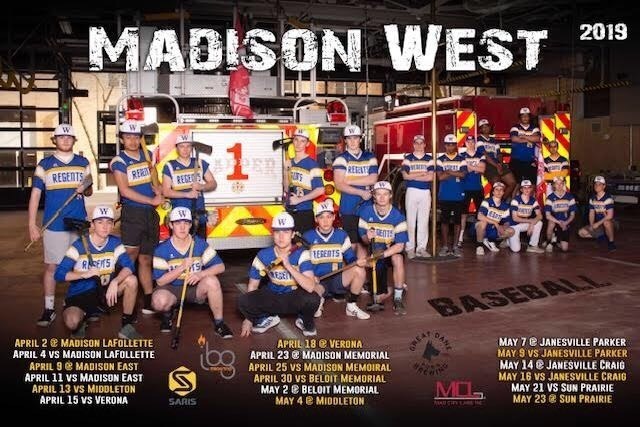
At Madison West, Baldwin was already establishing himself as one of the state’s top young baseball players. A four-time letter winner and four-year starter, he was a three-time all-city selection and ranked as the No. 2 catching prospect in Wisconsin.
But baseball was only half of Baldwin’s high school athletic career.
On the ice, Baldwin was a four-time letter winner for the Madison West hockey team, where he played center and left wing. His junior season was his breakout year, earning first-team All-Big Eight Conference honors and being named the league’s Player of the Year after leading the state with 43 goals and 70 points in 24 games. Baldwin also played for Team Wisconsin with Montreal Canadiens star Cole Caufield.
Baldwin followed that performance with another standout season as a senior and team captain, earning first-team all-state honors and becoming a finalist for the Wisconsin Hockey Coaches Association Player of the Year. His rise had been building for years: Baldwin was a second-team all-conference selection as a sophomore and earned honorable mention all-league honors as a freshman.
A fellow Madison area native, Liam Moreno, first encountered Baldwin in Middle School.
At the time, Moreno was already familiar with the young catcher from travel ball, playing against Greg Reinhard Baseball (GRB) teams and hearing the Baldwin lore around town.
“My story with him starts all the way back in eighth grade,” Moreno said. “Like, oh, this kid’s got a great bat. He was one of those players who was naturally gifted.”
Later, the two would face off as rivals in the Big Eight (a competitive high school athletic conference in south-central Wisconsin under the Wisconsin Interscholastic Athletic Association (WIAA)), with Moreno playing for Sun Prairie and Baldwin for Madison West. The duo would go on to become teammates at Missouri State and the Madison Mallards.
But Moreno believes hockey played an important role in shaping the baseball player Baldwin would become.
“I think what helped him a lot was hockey,” Moreno said. “He just kind of did hockey for fun, but he was also one of the best players on the ice at all times.”
That competitiveness followed Baldwin.
So did the work ethic.
Greiber remembers Baldwin as an eighth-grader who wanted to be around the West High baseball program. Baldwin’s mother approached the coaches and asked whether he could be involved as a manager.
He caught bullpens during open gyms.
It did not take long for people to notice.
“From the first week, you just knew he was special,” Greiber said. “Him catching bullpens for varsity pitchers, he was head and shoulders above his peers for a thirteen-year-old kid at the time.”
Greiber sees little difference between that eighth-grader and the Major League catcher Baldwin is today.
“It’s the same Drake,” he said. “Drake at thirteen years old, in eighth grade, has not changed at age 25 now. It’s the same Drake, same personality, means well and is down to earth.”
The sports changed depending on the season.
The attitude did not.
Big Eight baseball in the cold
Before the professional stadiums, minor-league bus rides and the Northwoods League summers, there was “spring” baseball at Madison West.
And spring baseball in Wisconsin does not always entail showers and flowers.
The Big Eight Conference schedule meant playing baseball before the weather had fully decided whether winter was over. Cold temperatures, snow flurries, stiff winds and damp afternoons were simply a part of the deal. Players learned quickly that there would be no waiting for perfect conditions.
Greiber remembers the Big Eight conference as a daily test.
“Big Eight baseball is probably the best conference in the state of Wisconsin,” Greiber said. “A team from the Big Eight was always represented in the state tournament, sometimes three, depending on the sectional.”
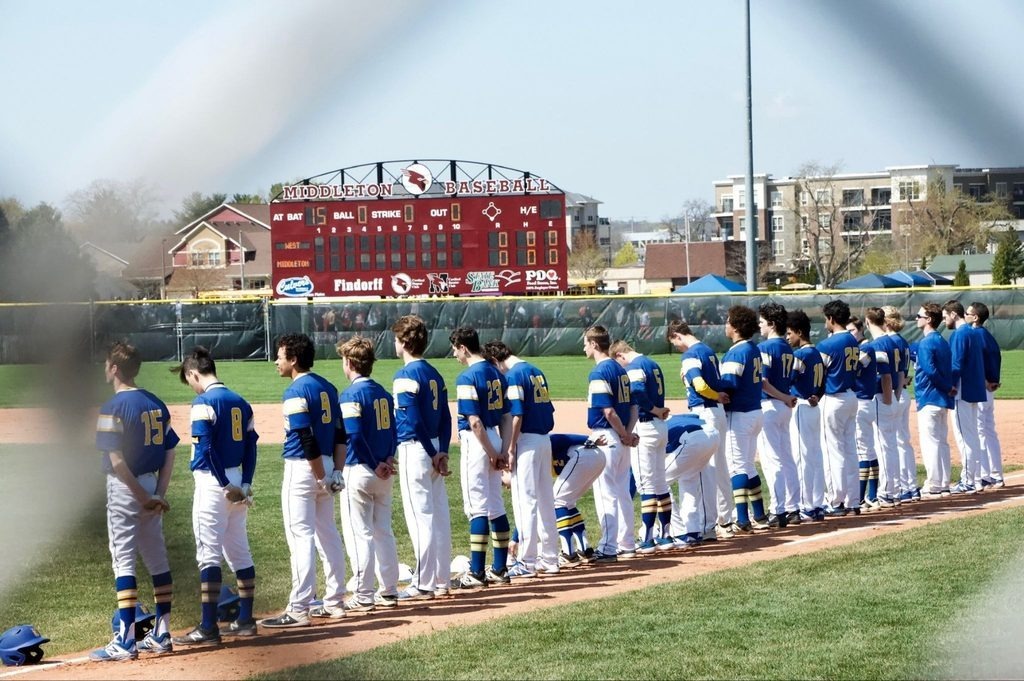
The competition was relentless. Sun Prairie, Janesville, Craig and Middleton were among the teams West saw at least twice throughout the season. Every contest could turn into a battle.
“Every team had a stud,” Greiber said. “Even Madison East High had a stud. If you run into Cam Cratic on a hot day, you never know it could be a 4-3 ballgame.”
For West, the challenge wasn’t only the teams across the field. Madison’s “spring” weather and limited practice space created another obstacle.
“Day in and day out was a grind,” Greiber said. “It was a constant grind.”
West High shared its baseball and football field with arch rivals Madison Memorial, meaning practice time and field access were dictated around Memorial’s schedule. When the field wasn’t available, the team had to find other ways to prepare.
“We had practices inside the Stevens Gym,” Greiber said. “There were times when we practiced in the parking lot or on the UW Marching Band practice field because the baseball field was too wet to play on.”
Madison West, which is located on an isthmus and steps away from the University of Wisconsin Madison campus, didn’t have the same space or facilities compared to its suburban opponents.
“You’re somewhat limited in Madison; space is an issue,” Greiber said. “You’re not like Waunakee or Middleton or Verona, with acres of land to practice and turf facilities. You have to get creative.”
While crosstown rival Memorial High took spring trips to Florida, Madison West loaded up on a coach bus to Xenia, Ohio.
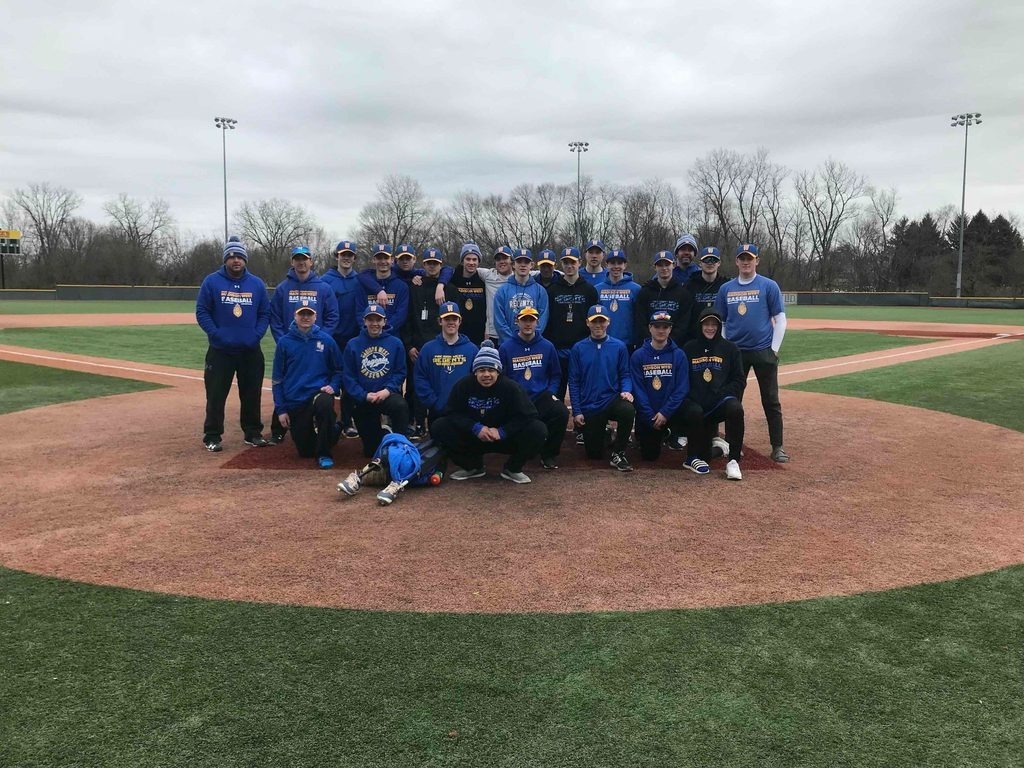
The trip offered something they couldn’t get at home, not warmer weather (it was actually colder in Ohio), but turf practice fields.
For Baldwin and his teammates, it was also a chance to spend extended time together away from Madison.
The baseball mattered, but so did everything around it: the bus rides, bunk beds, Fortnite and the experience of preparing for a season traveling with teammates.
“I remember the Fortnite (on the bus) going down and coming back was a highlight for a lot of the kids, for sure,” said Greiber.
That was the environment in which Baldwin’s high school career took shape: strong opponents, unpredictable spring conditions and a program that had to find ways to prepare regardless of what was available.
Baldwin hit .328 as a sophomore after the trip to Ohio and batted .344 as a junior, with 26 runs scored, three doubles, one triple, one home run, and 12 runs batted in.
Baseball doesn’t wait for perfect conditions.
The Northwoods Laboratory
The Wisconsin native played for the Kenosha (K-Town) Bobbers during the COVID-shortened 2020 season before spending the summer of 2021 with the Madison Mallards. The Northwoods League became a summer laboratory, where college players play almost every day, travel by bus, deal with imperfect conditions, and learn to recover quickly.
For a college player, the Northwoods League can be an introduction to a different kind of baseball.
The games come quickly. Travel is constant. The summer schedule can be unforgiving.
There is little time to dwell on a bad night because another game is waiting.
Baldwin hit .295 over 61 at-bats for K-Town and .316 with four home runs in 52 games over two and a half months.
The numbers mattered, but so did everything around them.
The Northwoods League has long served as a bridge between college baseball and professional baseball. Baldwin was one of many players learning how to handle the grind before eventually reaching the Major Leagues.
His path would later intersect with another Madison-to-MLB story: Nico Hoerner, who played for the Madison Mallards in 2016 before becoming a Major League infielder for the Chicago Cubs.
“I think every college player after their freshman year should play in the Northwoods League or as close to a league like that as they can get,” said Hoerner. “That schedule and the bus trips and the weird fan experiences at every game all that is really close to what I’m doing now.” Per Northwoodsleague.com.
The common thread throughout the Northwoods League is quality repetition.
Play today. Travel tonight. Play tomorrow.
Then do it again.
“The main thing was the mental toughness,” Moreno said. “Obviously, it gets physically draining. Just being there at the field some days, 12 hours a day, some days, eight. Some days you get there and you’re there for 6, and the game’s canceled, so you just go home, and it’s a lot of adjusting to the Northwoods schedule. I think that the biggest thing it helps with is just learning how to take care of yourself, really, as a player.”
For a game-caller like Baldwin, that kind of routine is particularly valuable. The position demands preparation even when the body is tired. Every pitcher requires attention. Every game provides another lesson.
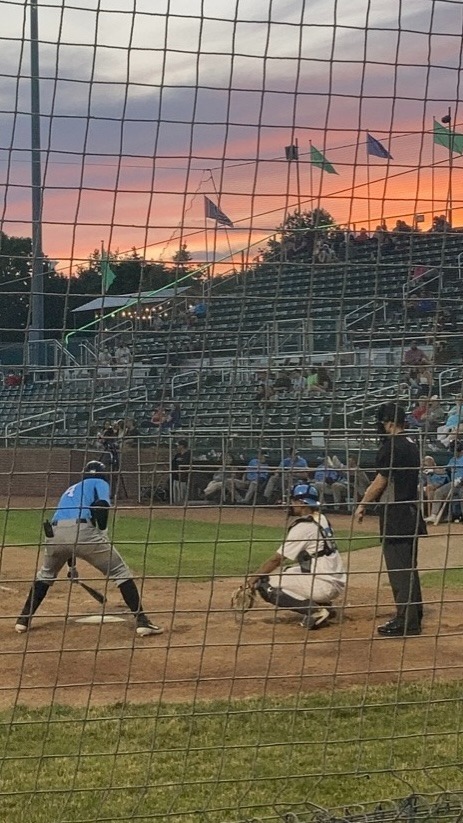
The Duck Pond may not look like the Major Leagues,
But it can teach someone how to survive them.
Missouri State to the minor leagues
Baldwin arrived at Missouri State as a highly regarded catcher from Madison West High School.
By Baldwin’s junior season, the backstop had become one of the best offensive players in the Missouri Valley Conference.
In 2022, Baldwin hit .341 with 19 home runs, 70 RBIs, a .448 on-base percentage and a .647 slugging percentage. Reaching base safely in 57 of 60 games and started all 60, including 53 behind the plate. The Missouri State backstop finished his career as the school’s all-time leader in fielding percentage (.994).
“You know, I never really saw him struggle, in general,” said Moreno. “Not many freshmen start or play a whole season either.”
The numbers tell one story.
The consistency tells another.
The 2022 season wasn’t built around one hot month. Baldwin repeatedly gave Missouri State quality at-bats, reaching base in 95 percent of games.
That approach has followed Baldwin into professional baseball.
Atlanta selected Baldwin 96th overall in the third round of the 2022 MLB Draft.
The selection made him the highest-drafted catcher in Missouri State history.
Baldwin’s professional introduction came quickly, reaching the Major Leagues in less than three full seasons.
In 2023 alone, Baldwin climbed from High-A Rome to Double-A Mississippi and eventually Triple-A Gwinnett.
Then came 2024.
The year Baldwin went from an interesting prospect to a nationally recognized one.
Beginning the season at Mississippi before earning a promotion to Gwinnett in June. Across the two levels, Baldwin hit .276 with 16 home runs and 88 RBIs in 124 games. The first Triple-A season was particularly impressive: a .298 average, .407 OBP, .484 slugging percentage and a .891 OPS in 72 games.
Then came Arlington.
The 2024 Futures Games.
Baldwin was surrounded by the kind of names that dominate prospect lists and eventually Major League lineups.
Roman Anthony, Dylan Crews, Owen Caissie, Chandler Simpson, Samuel Basallo and Marcelo Mayer were among the budding stars performing alongside Baldwin.
Baldwin didn’t simply participate.
He went deep. To the opposite field, leaving the bat at 107.3 mph and traveling an estimated distance of 411 feet. Baldwin also drove in another run with a sacrifice fly.
The moment was just a preview of what was to come.
From rookie to Rookie of the Year
Then came March 27, 2025.
Baldwin entered Spring Training knowing there was a possibility he might begin the season in Triple-A.
Instead, Sean Murphy’s rib injury opened the door.
Atlanta selected Baldwin’s contract and put him on its opening day roster.
He started behind the plate and caught the reigning National League Cy Young Award winner and World Series Champion Chris Sale in his first career MLB game.
A pitcher with a career built on deception, velocity, movement and one of the game’s most recognizable deliveries.
Suddenly, the kid from Madison was the starting backstop for the Atlanta Braves.
The Northwoods League was a long way away.
West High was even farther.
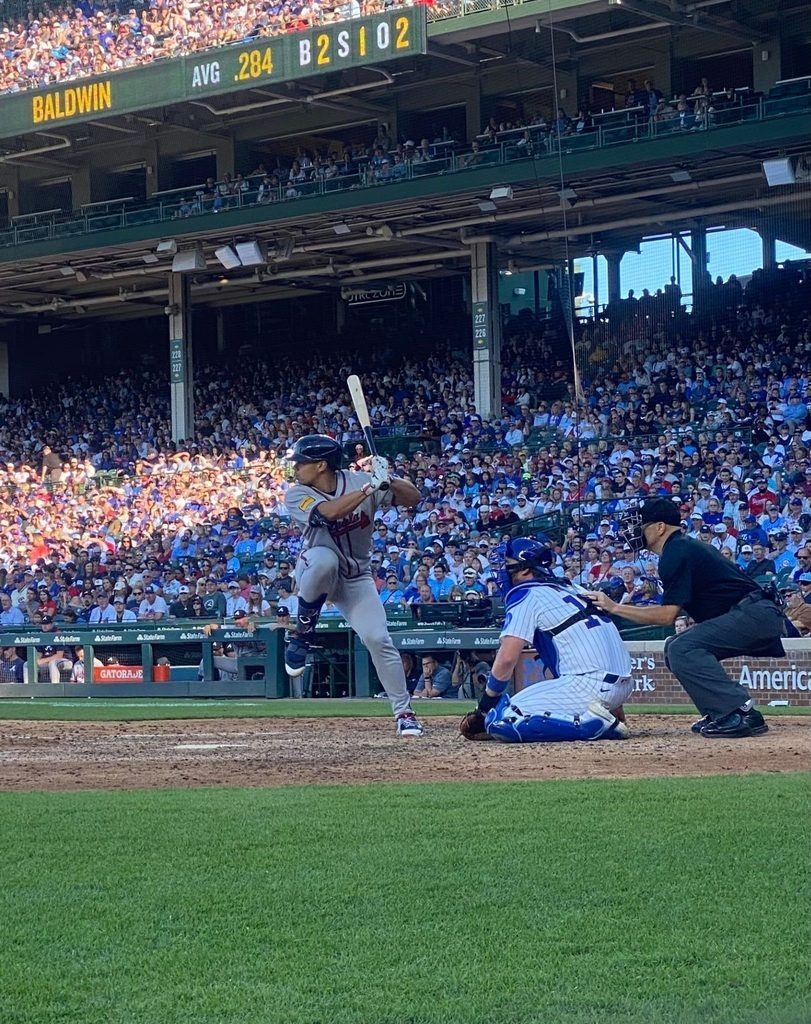
“Yeah, it definitely went pretty fast,” Baldwin said of his rise from Madison, Wisconsin, to MLB. “Especially coming back to places like this (Chicago & Milwaukee), you get a lot of friends and family who come out and you realize how many people were beneficial in that route to get to the big leagues.”
Baldwin had arrived.
The first Major League home run came less than three weeks later: an opposite-field long ball on April 16 against Toronto reliever Jeff Hoffman at Rogers Centre.
The transition wasn’t merely a cameo.
It became an established career.
Baldwin’s 2025 season turned the prospect story into something much larger.
Hitting .274 with 19 home runs, 80 RBIs and an .810 OPS, leading National League rookies in RBIs and finished among the league’s top rookies in home runs and total bases.
The Braves catcher was named the National League Rookie of the Year, making him the eighth Atlanta Braves to win the honor and the first Braves backstop to win it since Earl Williams (1971).
Baldwin is the tenth catcher in MLB history to receive the award: Johnny Bench (1968), Thurman Munson (1970), Carlton Fisk (1972), Benito Santiago (1987), Sandy Alomar Jr. (1990), Mike Piazza (1993), Giovanny Soto (2008) and Buster Posey (2010)
The awards and accolades didn’t fundamentally change what got him there.
The work remained.
The Second Act
If 2025 established Baldwin, 2026 has become the next test.
There have been adjustments.
Baldwin spent more time near the top of Atlanta’s lineup in 2026, often hitting second against left-handed pitchers and leadoff against righties. Continuing to produce power while dealing with the inevitable adjustments that come after a successful rookie season.
Pitchers know him now.
They have scouting reports.
They know where he likes the ball.
They know how he attacks certain counts.
Baldwin has to counter.
That is one of the most fascinating parts of his story.
The goal isn’t to remain the same player.
It’s to remain productive while constantly becoming a different one.
On June 16, Baldwin returned from an Oblique injury. With the first swing, the Braves backstop launched MLB’s longest homer of the year at the time (473 feet). Following the record homer, Baldwin faced his biggest challenge yet, hitting .063 in June, the lowest batting average of any month in his young career.
“I think before he got hurt, he was on an MVP-type trajectory,” Braves manager Walt Weiss said. “After missing time, he’s fighting to find his timing and get back to form. Before he got hurt, he was one of the best hitters in the game. So, he’ll get back there.” Per MLB.com.
Baldwin certainly “got back there”, hitting .324 in July with six home runs, 17 RBIs and 17 walks (most walks in a single month of his career). Arguably the best month of his young career.
The kid from Madison keeps finding ways to contribute and persevere through adversity.
More than a baseball story
Baseball has taken Baldwin around the country and eventually around the world, including his appearance with Team USA on the 2024 WBSC Premier12 team. Yet, Madison remains part of the person behind the ballplayer.
That is perhaps the simplest way to understand the story.
Baldwin didn’t leave Madison behind when he became a Major Leaguer.
He carried it with him.
The work ethic.
The sports culture.
The friendships.
The competitiveness.
The cold-weather toughness.
The willingness to play.
And then play again and again and again.
That was all on display on Tuesday, Sept. 15, against the Chicago Cubs.
The Madison native lit up when he heard that his homer and win over the Cubs made the Brewers clinch an NL Central crown. “Oh, they did?!” Baldwin exclaimed.
Maybe the win did mean a little more to Baldwin than he wanted to let on.
Baldwin’s story is no longer simply the kid from Madison who made it.
Still Drake
The most compelling part of Baldwin’s story may be that the same kid from Madison seems to exist underneath it all.
The kid who played hockey on frozen Lake Wingra, the catcher who loved baseball, the Northwoods League grinder, the college player who wouldn’t stop competing, the relentless prospect, the rookie who caught Chris Sale on Opening Day, the son whose mother made the trip to see him, the friend who still remembers Madison and the ball-player who, after reaching the highest level, is still trying to get better.
Moreno remembers Baldwin as a player who led more through his actions than his voice.
Greiber remembers a kid who never seemed interested in acting bigger than anyone else. He has pictures of Baldwin with his children from the days when Baldwin was just “Drake for the Mallards.” He remembers flying to San Diego with his son and father to watch Baldwin make his major league debut. He remembers Baldwin signing autographs after the game, even after starting his career 0-for-7.
The moment that stands out most, though, came later.
During Greiber’s son’s youth baseball season, he asked Baldwin for about 10 minutes of his time.
Baldwin stayed for 45.
He signed autographs, he took pictures and he talked with all the kids.
“He was just Drake, not Drake the All-Star,” Greiber said. “He has no idea what it does to the youth or the next generation. He didn’t have to do it, but he does. That’s what’s so cool about him.”
That may be the most revealing detail of all.
The story of Drake Baldwin is not only about how quickly he reached the Major Leagues.
It is about what he carried with him when he got there.
The kid who caught bullpens as an eighth grader.
The hockey player who dominated Wisconsin.
The Mallards’ catcher learning how to survive a summer schedule.
The Missouri State star who turned potential into production.
The 23-year-old who caught a Cy Young winner on Opening Day.
The 2025 NL Rookie of the Year.
The 2026 NL All-Star starting catcher.
And the 25-year-old who can still walk onto a youth baseball field in Wisconsin and spend 45 minutes with kids who simply want to meet him.
At Wrigley Field, the baseball disappeared into the right-field basket.
For everyone watching from Madison, though, the bigger story was never just where the ball landed.
It was how far the kid who hit it had come.

