




Long-Term Stability: Chicago Cubs Lock in Nico Hoerner as Core Takes Shape.
by Coleman Robbins
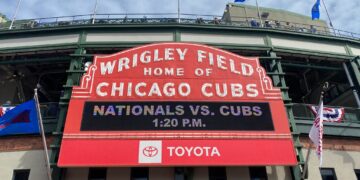
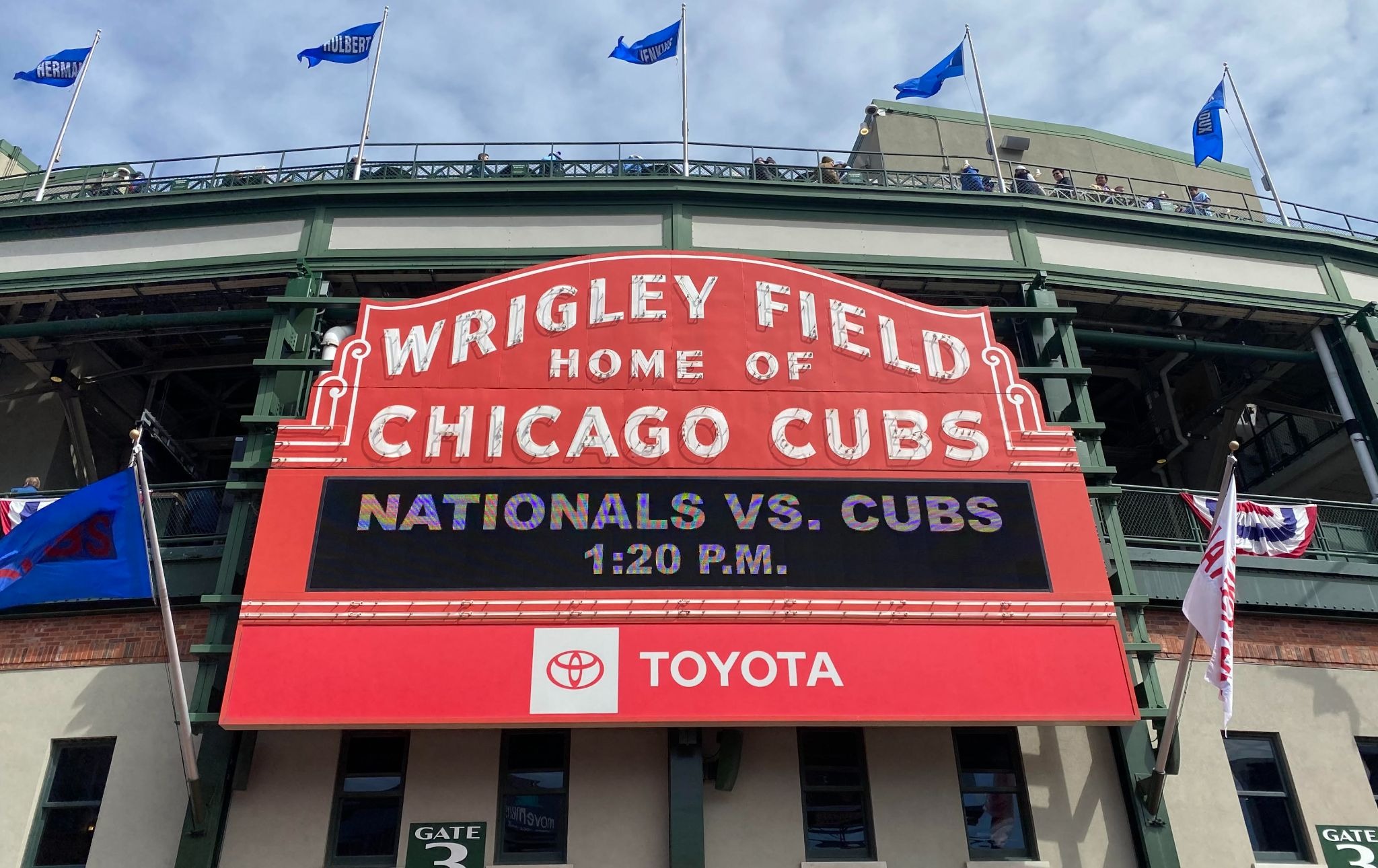
Chicago—The season’s first weekend delivered both frustration and reassurance for the Cubs. They stumbled out of the gate once again, starting 1-2 for the fourth straight season, dropping their Opening Series to the Nationals and absorbing a lopsided 10-4 Opening Day loss. But just as quickly as the disappointment set in, the front office shifted the narrative—locking up beloved second baseman Nico Hoerner, 28, to a 6-year $141 million contract extension with a no-trade clause (keeping him on the North Side through 2032).
The Cubs extended Pete Crow-Armstrong earlier in the week (six years, $115 million), shoring up the stellar middle defense for at least the next three seasons (with Dansby Swanson under contract through 2029), giving fans the continuity they’ve been anxiously searching for since the 2016 squad departed.
Nico Hoerner was drafted in 2018 by the Cubs (1st Round, Pick 24) out of Stanford University. Over eight years with the club, he has garnered a .282 BA, .723 OPS, with 15 HR, 279 RBI, 132 SB, in 706 games played: with a combined 19.6 WAR over the past four seasons.
Hoerner posted a .297 BA, .739 OPS, with 61 RBI, 29 SB, 39 BB, and a 6.2 WAR in 2025, batting .419 BA, with a .973 OPS, 1 HR, and 2 RBI in 8 playoff games. His 2025 batting average was the second highest in the National League, behind Philadelphia’s Trea Turner (.304); marking the highest batting average by a Cubs player since Ben Zobrist (.305) in 2018.
Hoerner’s 7.6% strikeout rate last season ranked as the third lowest among qualified Major Leaguers—trailing Jacob Wilson (7.5%) and Luis Arraez (3.1%). He also led the 2025 MLB in 2B WAR (6.2) and earned his second gold glove (2023 & 2025).
The extension ranks as the fourth-largest guaranteed contract ever for a second baseman behind Robinson Canó (10 years, $240 million), Marcus Semien (7 years, $175 million), and José Altuve (7 years, $163.5 million).
“This is where I want to be, and I feel so strongly about the direction of this organization right now and the success ahead of us. I’m really excited to make the most of it.”
The future is bright on the North Side, with the Cubs firmly in control of their core: Swanson (2029), Busch (2029), Nico (2032), Bregman (2030), and Crow-Armstrong (2032) all locked in for the long haul. Beyond that group, the organization has quietly built impressive depth, with key contributors like Cade Horton (2030), Edward Cabrera (2028), Javier Assad (2029), Daniel Palencia (2028, with options for 2029 & 2030), Moisés Ballesteros (2032), Matt Shaw (2031), and Miguel Amaya (2029) under team control for years to come. Now it’s on them to turn potential into production.
Off the field, Hoerner has been very active in the Chicago community, donating a portion of his 2023 extension (three years, $35 million) to the Northern Illinois Food Bank. He continues to partner with the organization for the “Pitch in to Beat Hunger” campaign, supporting food initiatives in Northern Illinois.
Looking ahead, with Nico Hoerner now off the market, the focus shifts to the Cubs’ next major decisions: the looming free agency of Ian Happ and Seiya Suzuki. Hoerner’s extension does more than secure a fan favorite; it signals a clear organizational commitment to building around contact, defense, and continuity up the middle. Locking down Nico Hoerner, Pete Crow-Armstrong, Alex Bregman, and Dansby Swanson has established a long-term defensive identity that will keep the Cubs competitive even as the roster evolves around them.
The real inflection point comes in 2027. By then, the Cubs will have greater clarity on their competitive window, while also facing increasing financial pressure as multiple long-term deals overlap. How the front office navigates that season, whether by doubling down on this core or pivoting around it, could define the trajectory of the franchise for the rest of the decade. If the current group produces, 2027 will become a springboard for sustained contention; if not, it may force tougher decisions on aging or underperforming pieces. All the while, the Brewers continue to steamroll opponents on a shoestring budget and embody the kind of consistency the Cubs are chasing.
With the infield locked up until at least 2029, the Cubs are essentially signaling that Matt Shaw is not a part of the future infield for at least the next three seasons (barring major injury). The Cubs’ 2023 first-round pick (13th overall) landed his first big league job last season as the team’s starting third baseman. In 2026, Shaw’s role was reduced to a utility man after Alex Bregman signed. Right now, he’s filling in for the injured Seiya Suzuki, but Suzuki will be coming back soon. The pressure is on to get up to speed at a position he isn’t too comfortable with. Suzuki and left fielder Ian Happ are both eligible for free agency after the end of the season, and the Cubs may not hold on to either.
The best chance for Shaw to force himself into this lineup could be at a corner outfield spot next season if the Cubs decide not to bring back Suzuki and/or Happ. Unless there is a major injury to Bregman, Hoerner, or Swanson, Shaw’s Cubs future may be as a utility man or, more likely, as a trade piece for more pitching depth.
For Hoerner, the deal offers both security and validation. At six years and $141 million, he’s paid like one of the top second basemen in the game, particularly when factoring in his elite defense and low strikeout profile. Hoerner could have tested free agency and gone for a higher average annual value (AAV) deal (like Kyle Tucker’s), especially if he continued to produce at a near .300 clip with Gold Glove defense. But, given the volatility of the market, the looming CBA, and his unique skill set (one that relies more on consistency than power), the long-term guaranteed contract represents a strong outcome for both sides.
Ultimately, this extension is less about a single player and more about direction. The Cubs are choosing stability, defense, and internal development over constant turnover. Whether that translates into October success will depend on what comes next. The window is open, and the pressure is on to deliver. But for now, the foundation is firmly cured in place.

