






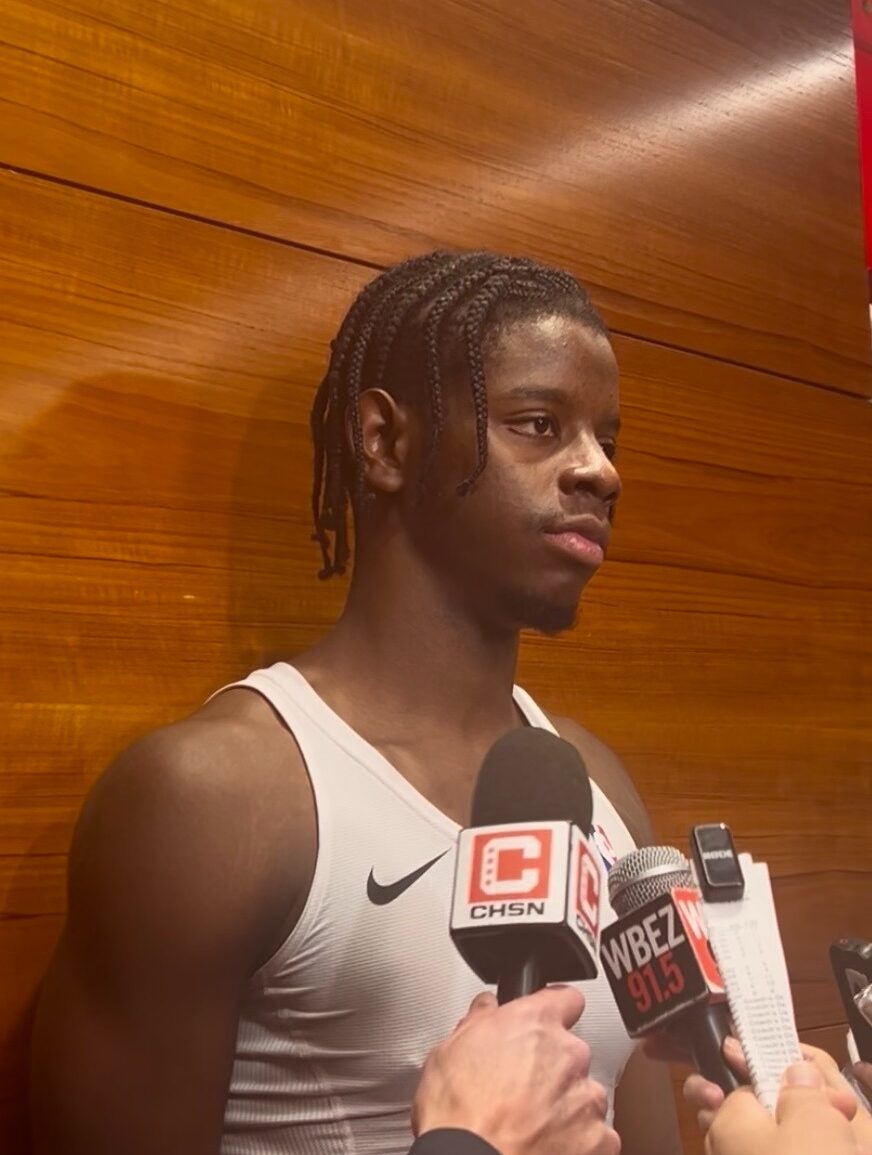
CHICAGO—The Chicago Bulls have spent decades trying to recapture the magic of their championship years, with each new era measured against the legends who made the United Center a basketball destination.
Michael Jordan and Phil Jackson delivered six championships. Derrick Rose and Tom Thibodeau restored Chicago’s place among the Eastern Conference’s contenders. Now, a new generation headlined by another Tar Heel, rookie Caleb Wilson and head coach Tiago Splitter are attempting to build something different.
The Bulls enter the 2026-27 season with a new direction, a young roster and plenty of questions. After finishing 31-51 last season, the Bulls entered the preseason with a new coach, a new front-office leader and a young roster searching for an identity. Five exhibition games later, Tiago Splitter’s team has offered glimpses of an exciting future.
Chicago went 3-2 in the preseason, winning its final two games against the Milwaukee Bucks and Minnesota Timberwolves. The results were encouraging, but the more significant developments came from a roster full of long, versatile players learning to operate in Splitter’s free-flowing system.
There are a plethora of reasons for optimism. Wilson has shown the confidence to attack the National Basketball Association competition; Josh Giddey is fitting into the facilitator role; Leonard Miller has made a compelling case for a larger role; and young forwards such as Matas Buzelis and Noa Essengue offer additional developmental upside.
Yet injuries to Nic Claxton (hamstring) and Zach Collins (quad/toe surgery) have exposed the frontcourt’s most immediate weakness. Chicago’s length and athleticism can create defensive versatility, but the Bulls still must prove they can protect the rim, rebound consistently and withstand the league’s most imposing big men.
Executive Vice President of Basketball Operations Bryson Graham and Splitter are attempting to establish a new direction, the preseason has provided an early look at both the possibilities and the growing pains of Chicago’s rebuild.
Frontcourt defense and injury trouble
With Claxton and Collins sidelined during preseason, the Bulls have had to experiment with their rotations and ask players to assume unfamiliar responsibilities. Chicago’s frontcourt depth has been tested before the regular season has begun. The brief preseason appearance of two-way forward Tobe Awaka offered another glimpse of the depth Chicago hoped to evaluate, but his abbreviated run (knee injury) further complicated the picture.
Caleb Wilson, Buzelis, Patrick Williams, Jalen Smith and Essengue have all factored into the team’s efforts to fill frontcourt roles. The experimentation has provided valuable opportunities for a young roster, but it has also highlighted the risks of relying on versatility to compensate for a lack of available traditional big men.
According to NBA.com, the Bulls are one of nine NBA teams (Nets, Cavaliers, Pistons, Hawks, Magic, Nuggets, Rockets and Pelicans) to have zero players seven feet or taller. Chicago faces off against a host of seven-footers in the first month of the season: Jakob Poeltl, Kel’el Ware, Deandre Ayton, Alex Sarr, Mitchell Robinson, Neemias Queta, Karl-Anthony Towns, Joel Embiid, and Victor Wembanyama.
Chicago’s length can disrupt passing lanes, create switching opportunities and help the defense recover against perimeter attacks. Yet those advantages do not automatically translate into reliable rim protection or defensive rebounding.
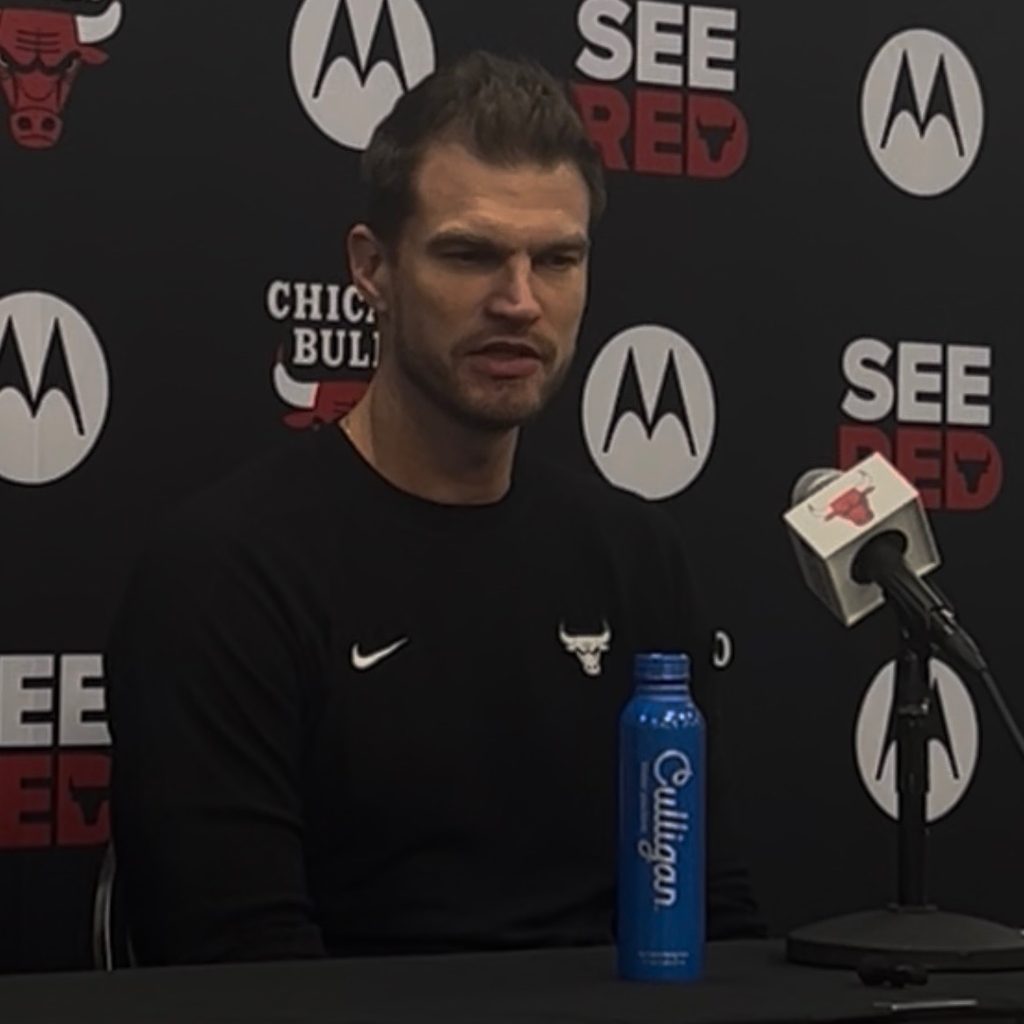
Against bigger, more physical frontcourts, the Bulls must demonstrate they can protect the paint without surrendering second-chance opportunities. That challenge will become more pronounced against opponents with established interior scorers and dominant rebounders.
For Splitter, the preseason has become an opportunity to evaluate how his players respond when the original defensive assignments break down, and the game becomes less predictable.
Caleb Wilson: A promising start, with plenty to learn
The fourth overall pick in the 2026 NBA Draft has already offered a preview of why Chicago sees him as a foundational piece.
Wilson arrives in the “Windy City” after a productive freshman year at North Carolina, averaging 19.8 points, 9.4 rebounds and 2.7 assists in 24 games. The Tar Heel shot 57.8% from the field and 25.9% from the 3-point range, establishing himself as an explosive scorer and productive rebounder despite his youth.
Those numbers tell the story of a player who could overwhelm college opponents with his athleticism, length and finishing ability. His NBA preseason has been a different test. Across five games, Wilson averaged 15.8 points, 4.4 rebounds and 2.8 assists in 26.6 minutes. The rookie’s preseason production fares favorably among the three players drafted before him.
Washington’s AJ Dybantsa, the first overall pick, averaged 12.8 points, 3.8 rebounds, 1.8 assists and 21.5 minutes in four games. Utah’s Darryn Peterson averaged 13.3 points, 4.3 rebounds, 4 assists, and 25.5 minutes in four games. Memphis’ Cameron Boozer averaged 14 points, 5.5 rebounds, 3 assists, and 20.3 minutes in four games.
Wilson led that group in scoring, averaging 2.8 more points per game than Dybantsa, 2.5 more than Peterson and 1.8 more than Boozer. The Bulls rookie played more minutes per game than his counterparts, allowing him additional opportunities to produce.
The shooting numbers add another dimension to the comparison. Wilson connected on 31% (9-29) of his 3-point attempts, ahead of Dybantsa’s 18.2% (2-11) and Peterson’s 21.4% (3-14), although Boozer bested Wilson, shooting 33.3% (4-12) from behind the arc. However, these are extremely small sample sizes and Wilson shot double the volume of his counterparts. Of course, this does not establish a definitive ranking among the rookies, particularly with each player having appeared in only four or five exhibition games.
The broader comparison is more revealing than the scoring race alone. Peterson’s four assists per game point to his playmaking potential, while Boozer’s 5.5 rebounds, 33.3% from beyond the arc, and three assists reflect his ability to contribute in multiple areas. Dybantsa’s scoring and athleticism remain promising despite early struggles from deep.
Wilson has shown Chicago several ways to generate offense: finishing above the rim, attacking closeouts, operating in transition and occasionally stretching the floor. The challenge will be learning to produce efficiently when NBA defenders take away his preferred options.
The 3.4 turnovers per game stand out. His 2.8 assists per game average during preseason is encouraging for a forward learning to create for teammates, but the turnovers show that his reads and ball-handling still need refinement. NBA defenders close passing lanes faster, recover quicker and punish mistakes that might have gone unchallenged in college.
The youngster’s perimeter shooting is worth monitoring. Wilson’s 31% mark from the 3-point range is a particularly interesting development. He shot just 25.9% from deep in college, so the preseason offers an early indication that the rookie may be capable of expanding his offensive range. Five games are far too small a sample size to establish that as a reliable skill, but even a credible perimeter threat would make Wilson exponentially more difficult to defend.
The Bulls are encouraging their young star to develop beyond the established role of a finisher. Wilson must learn to handle the ball against pressure, make decisions in traffic and recognize when a mismatch is worth attacking.
The encouraging part is that his mistakes have come while attempting to expand his game rather than simply repeating what worked in college.
The 20-year-old has also demonstrated the confidence to take difficult shots and finish above the rim while taking on defensive challenges. The Bulls rookie doesn’t appear to be intimidated by the physical demands of the NBA, even as he continues to learn how to navigate screens, maintain his defensive positioning, and manage possessions.
“When it comes to screen navigation, I’m humongous,” Wilson said. “So it’s hard to get through screens. I’m working on being more physical before it, being in the right place on the court.”
The 20-year-old does not need to be a finished product in October. Wilson’s preseason should therefore be viewed as a promising first step rather than proof that he is ahead of his draft class. He has produced at a high level, but his efficiency, decision-making and defense must become more consistent.
For Chicago, development is the priority. The Bulls don’t need Wilson to win a preseason scoring race. They need longevity and consistency, a player who can contribute to winning basketball for years to come.
Leonard Miller’s opportunity arrives
Few players better represent the possibilities of Chicago’s developmental approach than Leonard Miller.
The 22-year-old has emerged as an intriguing young piece for the Bulls after struggling to find a consistent role during his two-and-a-half NBA seasons with the Minnesota Timberwolves before being dealt to Chicago in the Ayo Dosunmu transaction. The 22-year-old’s size, mobility and offensive instincts offer Chicago another potential solution to its frontcourt questions.
Miller’s path to the NBA was unconventional.
Born Nov. 26, 2003, in Scarborough, Ontario. Miller’s basketball development took him through several high schools in Canada and the United States before a postgraduate season at Fort Erie International Academy in Ontario helped establish him as a major prospect.
After experiencing a significant growth spurt, Miller developed from a guard-sized prospect into a 6-foot-10 forward. He became a standout at Fort Erie, helped the program win an Ontario Scholastic Basketball Association title, and earned the 2021-22 BioSteel Canadian Boys Player of the Year award, also earning an invitation to represent Team World at the 2022 Nike Hoops Summit.
Miller initially declared for the 2022 NBA Draft before withdrawing and joining the NBA G League Ignite. In 24 games during the 2022-23 season, he averaged 18.0 points, 11.0 rebounds, and 1.6 assists.
The San Antonio Spurs selected Miller with the 33rd overall pick in the 2023 NBA Draft before trading him to the Minnesota Timberwolves on draft night.
The Timberwolves had an established collection of frontcourt players, making it difficult for Miller to find a consistent place in the rotation. Across his two seasons with the Timberwolves, he appeared in 30 games without a start, spending much of his time developing outside the regular rotation.
Minnesota’s head coach Chris Finch said the competition for minutes made Miller’s path to the floor particularly difficult.
“The pathway for him to play was not very clear or easy,” Finch said. “We had KAT (Karl-Anthony Towns), Julius (Randle), Naz (Reid), Sixth Man of the Year at the same position and we had Rudy (Gobert). Those were three of our best players, of our top six. So we’re trying to maximize minutes for those guys.”
Finch said Minnesota saw Miller’s development, particularly after his productive time in the G League, but struggled to find minutes for another big man.
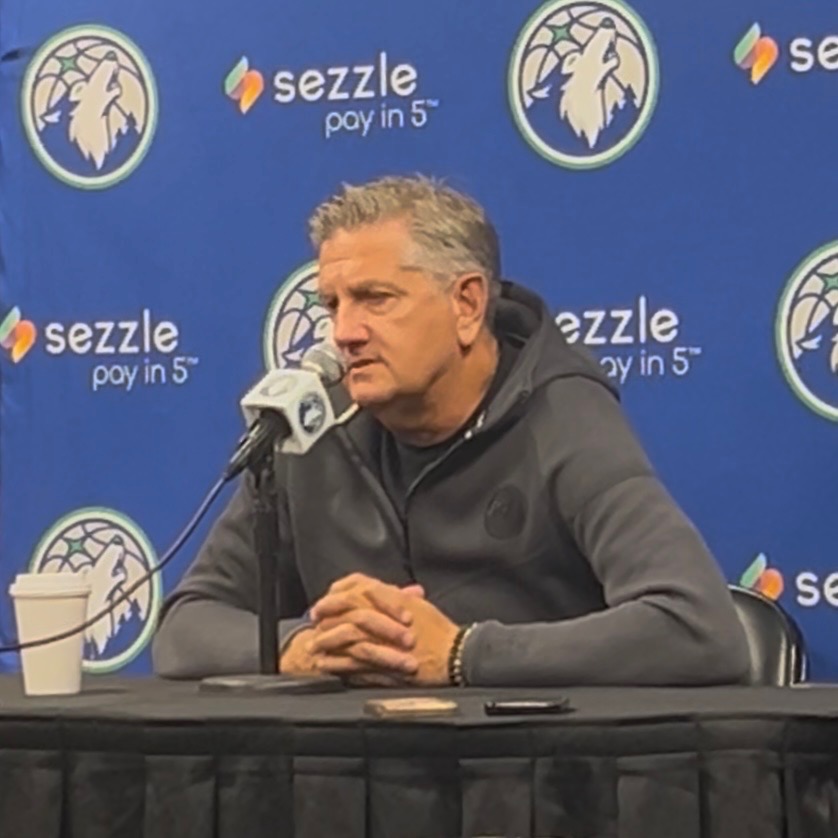
“It was really about opportunity and so many things are in the league,” Finch said. “We’re tickled for him. We love him as a guy and he was really great to coach.”
Chicago offers a different environment, one in which developmental opportunities are available and positional flexibility is a priority. Miller’s ability to operate as a power forward or center, run the floor and take advantage of mismatches could make him an important asset.
Splitter has already emphasized the value of having players who can function at multiple positions.
“He (Miller) can do both positions,” Splitter said. “Of course, his versatility there is awesome. He can attack slower bigs. We talk about random basketball. I think he’s great at that. It’s really hard to predict what he’s going to do and he’s effective in those situations.”
Versatility will be imperative while the Bulls navigate their frontcourt injuries. Miller can offer a different look against slower opponents while providing the mobility necessary to keep pace with a faster lineup.
For now, Chicago has an opportunity to evaluate a player who spent much of his early NBA career waiting for a chance to prove himself. With Collins and Claxton down, Miller had an open runway during the preseason and took advantage. In five exhibition games, Miller averaged 16.4 points, 6.4 rebounds, two assists and 1.4 turnovers in 19.8 minutes (including a 26-point performance against the Denver Nuggets).
After shooting 35.6% (31-87) from three in 27 games with the Bulls last season, the 22-year-old shot 55.6% (10-18) in five games this preseason. Although the sample is small, the results offer a promising start for a young player trying to find his footing.
Miller’s preseason performance suggests he can become a useful piece of the rotation. Sustaining that production against starters, defending consistently against seven-footers and maintaining efficiency when opponents adjust will determine whether the 22-year-old can turn a strong exhibition stretch into a permanent role.
A young core: Versatile and lanky
The Bulls’ roster increasingly reflects a commitment to length, athleticism and positional flexibility, rather than building around rigid positional definitions. Chicago has assembled a collection of young players capable of defending multiple positions, attacking mismatches and creating opportunities in transition.
The potential is apparent. So are the growing pains.
Buzelis offers size and perimeter skill, Wilson brings the promise of a versatile forward and Miller has emerged as an intriguing developmental piece with the ability to contribute in multiple areas. Jalen Smith, Essengue, Awaka and Williams provide additional options as the Bulls continue to sort through their frontcourt combinations until the return of Claxton (who Splitter said would be re-evaluated in approximately two weeks) and Collins (full participant in Monday’s practice).
Dailyn Swain adds another developmental piece, with his passing and decision-making offering a potential pathway toward a secondary playmaking role. Swain averaged 5.4 points, 1.8 rebounds, 2.8 assists, and 1.6 turnovers in 17.2 minutes over five preseason games.
Young, versatile players can make a defense difficult to scout, particularly when they switch assignments and attack mismatches. Positional flexibility also demands communication, disciplined rotations and an understanding of when to exploit a matchup rather than force an advantage.
Splitter’s system encourages quick decisions and fluid movement instead of prolonged possessions built around a single option.
Chicago’s preseason has offered a preview of what that approach can look like when the pieces fit. The next step is consistency.
Essengue’s development will depend on translating physical tools into reliable defensive positioning and offensive decisions. Swain must learn under the wing of NBA vets such as Norman Powell and Tre Jones to make reads and passes against NBA pressure, while Awaka needs to demonstrate that his physicality and rebounding can translate into dependable minutes.
Not every prospect will develop at the same pace; Splitter and Graham must decide which players are ready to contribute immediately and who needs more time. That is the nature of a rebuild. The Bulls are not simply searching for the next star; they are trying to assemble a group whose individual strengths complement one another.
Ready for liftoff: Josh Giddey and Splitter’s system
Giddey is expected to be central to Chicago’s effort to establish an offensive identity. The 24-year-old could be the player who makes Chicago’s collection of young talent function as a team.
The oversized point guard’s vision and ability to push the ball in transition complement a roster filled with long, athletic players who can run the floor and attack open space. When Giddey can initiate the offense before the defense gets set, the Bulls have an opportunity to turn their length into easy baskets rather than relying exclusively on half-court execution.
That philosophy fits Splitter’s emphasis on what he describes as random basketball: creating advantages through pace, movement and quick decisions instead of depending on predetermined plays for every possession.
“It’s a balance,” Splitter said. “When you have random basketball, when you’re running in transition, when you’re just playing out of small rules that we have: running to the corners, playing fast, quick pick-and-rolls. It’s hard to call a specific play.”
The system asks players to recognize opportunities as they develop. A defensive rebound can become a transition attack, a quick screen can force a mismatch and an opponent’s hesitation can open a driving lane before help defense arrives. When players can occupy different spots on the floor, the Bulls can change the look of their offense without substituting or slowing the pace.
That freedom, however, comes with a responsibility to make the right decision. Random basketball can generate open shots and favorable matchups, but without disciplined spacing and sound execution, it can quickly devolve into disjointed possessions.
For a young team still learning to play together, finding that balance will be one of Splitter’s most important tasks.
From Jordan and Jackson to Rose and Thibodeau: Sustaining the connection between front-office vision, roster construction and coaching
Every new Bulls era carries the weight of the franchise’s past, but Chicago’s championship history is as much a story of front-office decisions as it is of the players and coaches who delivered on the court.
Jerry Krause helped build the Jordan and Jackson dynasty, acquiring Scottie Pippen, drafting Horace Grant and bringing in key pieces such as Toni Kukoč and Dennis Rodman. The ability to identify talent and construct a championship roster helped Chicago win six titles in eight seasons. Yet the same era ended amid a bitter breakdown between Krause, Jackson and Jordan, illustrating how organizational decisions can shape a franchise long after the final buzzer.
The Bulls’ next sustained period of contention came under John Paxson and Gar Forman, the front-office duo commonly referred to as GarPax. The tandem helped assemble the team that reached the Eastern Conference Finals in 2011, when Rose became the youngest MVP in NBA history. Thibodeau built a defensive identity around Rose, Joakim Noah, Luol Deng and a physical supporting cast, leading Chicago to 62 wins.
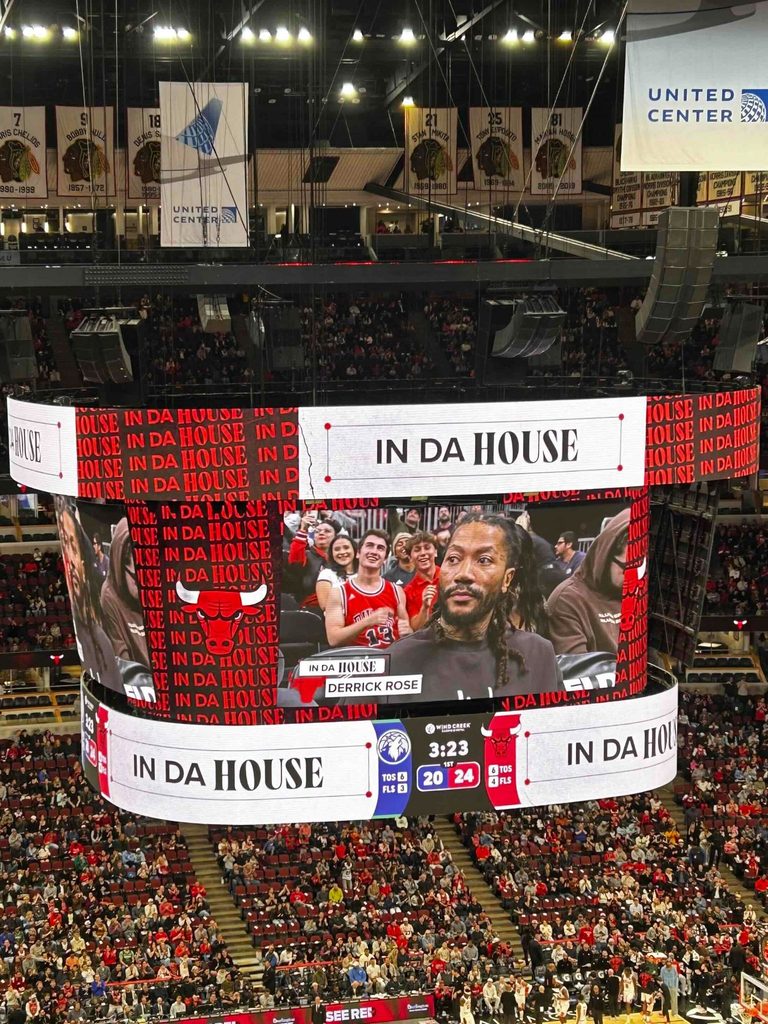
Rose missed the entire 2012-13 season, yet the Bulls went 45-37, earning the East’s fifth seed and reaching the second round of the playoffs. That run demonstrated what Thibodeau’s defensive structure and the team’s established core could accomplish without their superstar. It also underscored the distinction between a strong regular-season team and one with the offensive firepower to sustain a championship push.
GarPax’s incumbency ultimately became defined by the difficulty of maintaining that level of contention. The Bulls made the playoffs in seven of Forman’s 12 seasons as general manager, but they did not return to the conference finals after 2011. Fred Hoiberg’s tenure, which began in 2015 with hopes of bringing a faster, more modern offense to the NBA, unraveled as the roster changed around him. After the Bulls traded Jimmy Butler in 2017, Zach LaVine became a central piece of the rebuild, alongside young players such as Lauri Markkanen and later Coby White. Hoiberg was fired during the 2018-19 season after a 5-19 start and Jim Boylen took over as the organization continued searching for sustainable direction.
The front office’s long run ended in 2020, when Chicago moved on from Forman and reassigned Paxson.
The Artūras Karnišovas and Marc Eversley era that followed promised a fresh start with Billy Donovan at the helm, building around LaVine, DeMar DeRozan and Nikola Vučević. The Bulls started the 2021-22 season among the Eastern Conference’s best teams and finished 46-36, earning the sixth seed. LaVine and DeRozan supplied the offensive firepower, while Lonzo Ball and Alex Caruso helped establish a more connected defensive identity.
Ball’s knee injury severely changed the trajectory. His absence deprived Chicago of a key playmaker and perimeter defender, and the roster struggled to maintain its early-season form. The Bulls lost in the first round to Milwaukee and never reached that level of contention again. DeRozan departed in 2024, LaVine was traded in February 2025 and the team’s attempt to remain competitive while retaining its veteran core gave way to a broader teardown.
Donovan’s six seasons reflected that uneasy middle ground, coaching Chicago to its lone playoff appearance of the period, yet the team never advanced beyond the first round. Unlike the Rose-era Bulls, who remained a playoff team through Rose’s absence in 2012-13, the LaVine-DeRozan group couldn’t establish a durable identity amid injuries and roster limitations.
The Bulls have already experienced the temptation of trying to accelerate a turnaround by assembling established scorers. The LaVine-DeRozan team was talented enough to make the playoffs, but it lacked the health, continuity, and depth to become a serious contender.
Chicago finished 31-51 in 2025-26, missing the playoffs for a fourth consecutive year. The Bulls dismissed Karnišovas and Eversley in April. Bryson Graham’s hiring in May marked another organizational reset.
Graham now faces a challenge that goes beyond finding the next star; building a front office capable of identifying talent, developing young players and constructing a roster with a clear long-term direction. Caleb Wilson is not Rose or Jordan and Graham is not Krause. The current Bulls have neither the established superstar nor the proven championship core that defined those earlier teams. The lesson from Chicago’s history is not that the franchise must create Jordan and Jackson or Rose and Thibodeau. A successful era requires alignment between the front office, the coaching staff and the roster.
A challenging opening schedule awaits
The preseason has given Chicago a glimpse of its potential, but the regular season will offer a much tougher test: whether Chicago’s athleticism can offset its frontcourt concerns.
The Bulls open on the road tomorrow against the Toronto Raptors, then face Milwaukee on Oct. 23 and a home opener against Washington on Oct. 24. Boston, New York, Philadelphia, and San Antonio provide additional early-season tests as the tough schedule continues.
The aforementioned early-season matchups against playoff-caliber teams will challenge Chicago’s ability to defend experienced teams while its young players learn Splitter’s system.
To compete against the established centers, like Wembanyama and Towns, Chicago can’t expect to solve the matchup through switching alone; the Bulls will need disciplined help defense, coordinated rotations and strong rebounding at both ends of the floor.
“Everybody needs to crash,” Bulls guard Tre Jones said. “Instead of it just being a couple guys each possession or a couple spots on the court, it’s everybody trying to go in some way or shape.”
Chicago looks to establish its defensive identity while managing frontcourt availability and integrating a young group into Splitter’s system. Early matchups against more experienced teams could expose weaknesses in rebounding, rim protection and half-court execution before the roster has fully settled.
That makes the opening stretch particularly important. Chicago can’t afford to treat every early-season game as an extended experiment, even if development remains a central priority.
For Chicago, liftoff will depend on turning preseason promise into regular-season progress. The preseason suggests the ingredients are there. The regular season will reveal how quickly the Bulls can turn those ingredients into a coherent identity.

