





CHICAGO—Ten years ago today, the Wisconsin Badgers defeated No. 5 Louisiana State University, a team consisting of future NFL players Jamal Adams, Leonard Fournette and Tre’Davious White, in the season opener at Lambeau Field.
A decade later, the Badgers face another AP preseason top-five opponent at Lambeau. This time, Wisconsin isn’t coming off a 10-3 2015 season, but a 4-8 stinker. A slow start isn’t an option for a Badgers football team poised to take on No. 4-ranked Notre Dame on Sunday to kick off the 2026 season.
For Wisconsin head coach Luke Fickell, the matchup brings back memories.
Sunday will feature two former colleagues squaring off on national television. Fickell hired current Notre Dame head coach Marcus Freeman as his defensive coordinator at Cincinnati.
“I’ve known him for a long time, and I’ve been around some really good coaches,” said Fickell when reminiscing about his time with Freeman. “Coaches like that continue to find ways to make themselves even better. Seeing the growth of that program and that team from afar, there is a part of it that makes you happy about it, having a history with a lot of the guys that are there with that staff.”
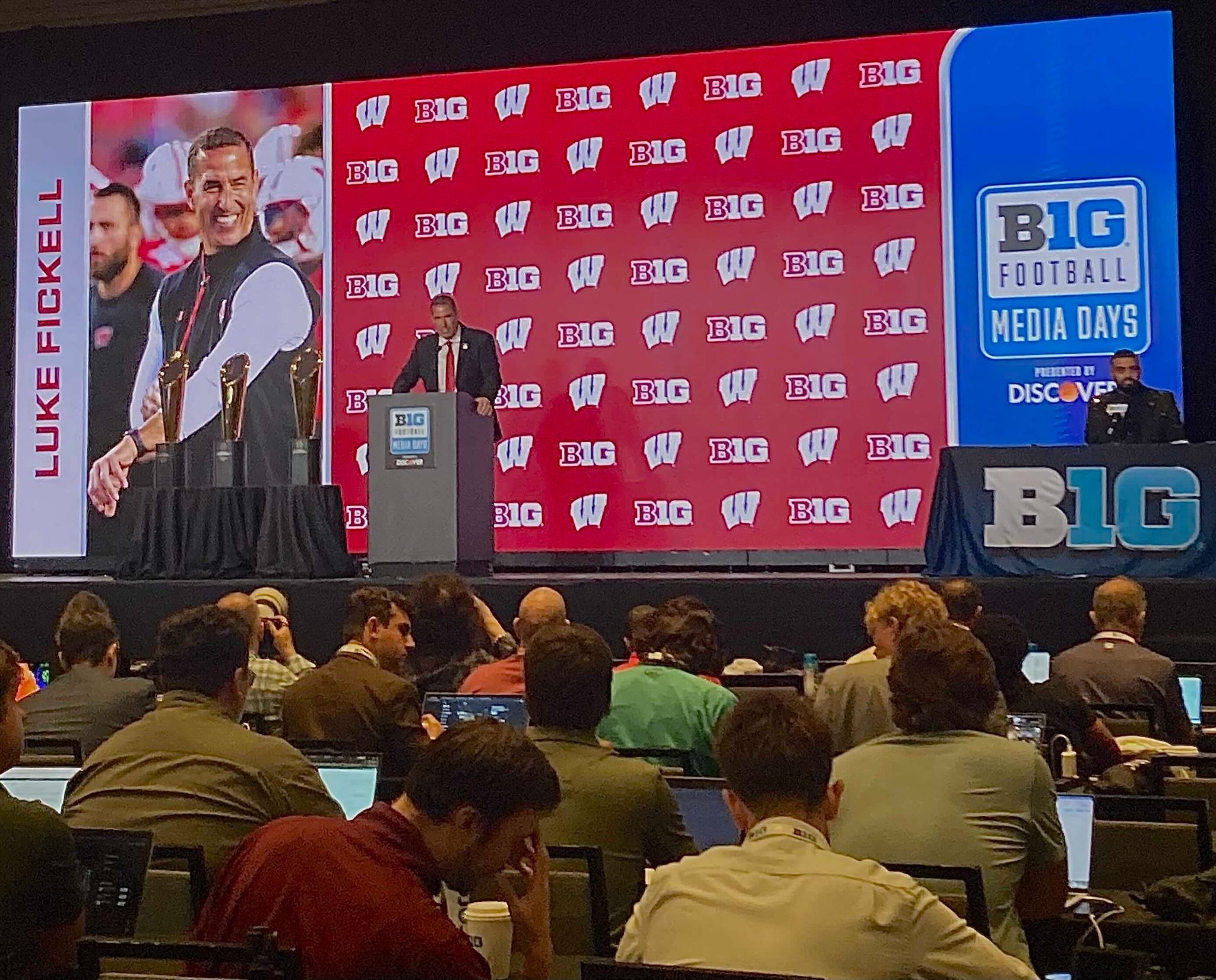
Not mincing words in the slightest, Fickell made one thing clear at Big Ten Football Media Days: The Badgers have not been good enough.
“The last two years for us have not been up to the standard, and I’m not shying away from that,” Fickell said. “The standard we have to uphold and where we have to grow as a football program, it hasn’t been there.”
For a program built on consistency, physicality and winning football games, the numbers tell a sobering story.
Finishing 4-8 last season and 2-7 in Big Ten play. Fickell enters his fourth season in Madison with a 17-21 record, including back-to-back losing seasons. The Badgers averaged just 12.8 points per game in 2025, an offensive output that stood in stark contrast to the physical, successful identity Wisconsin has built over the last several decades.
The struggles are particularly striking considering Fickell’s résumé before arriving in Madison. The former Cincinnati head coach compiled a 57-18 record with the Bearcats and guided the program to the College Football Playoff.
The challenges at Wisconsin have been far more complicated.
The Badgers faced the nation’s No. 1 strength of schedule in 2025, according to Yahoo Sports, taking on Alabama, Ohio State, Michigan, Oregon and the eventual national champion Indiana. Wisconsin still managed late-season victories against Washington and Illinois, providing a glimpse of what the program hopes can become a foundation for a turnaround.
Instead of facing Ohio State, Oregon, Indiana, or Michigan, Wisconsin will play the likes of Penn State, Michigan State, UCLA, USC, Rutgers, Maryland, Purdue, and Minnesota. As well as two non-conference games against Western Illinois and Eastern Michigan.
Although easier than last season, Wisconsin will take on four pre-season AP Poll-ranked teams (Notre Dame, Penn State, USC, and Iowa); all except USC will be either neutral (Lambeau Field vs Notre Dame) or away games.
The Badgers enter 2026 at a crossroads.
Fickell believes the program has changed. The roster has changed. The university’s leadership has changed.
Around the corner from Camp Randall Stadium, the facilities—and financial landscape surrounding Wisconsin athletics—are changing, too.
A different Badgers offense
Perhaps the most significant change on the field is under center.
Wisconsin turned to the transfer portal to land former Old Dominion quarterback Colton Joseph, one of the most intriguing dual-threat quarterbacks available this offseason.
Joseph threw for 2,624 yards and 21 touchdowns in 2025 while rushing for another 1,007 yards and 13 scores. His ability to create plays with his legs gives the Badgers an offensive dimension they have lacked for years.
“He has played in a lot of big games,” said Fickell about his new quarterback. “Everybody understands there is a lot of pressure. I haven’t looked him in the eyes in one of those games yet.”
Joseph has already proven he can produce against elite competition. Last season, the Old Dominion product rushed for 179 yards and two touchdowns against the eventual undefeated national champion Indiana Hoosiers.
Now, Joseph takes over a Big Ten program of his own.
The Badgers have struggled to find consistency through the air in the Fickell era; Joseph’s mobility could allow Fickell and his staff to build a more balanced, professional-style offense around a quarterback who can threaten defenses in multiple ways.
“Maybe he (Joseph) hasn’t been in Lambeau Field or some of these national TV games, but once the ball is kicked off, there is not that much of a difference,” Fickell said. “He’ll be able to adjust to that.”
Wisconsin also added help in the backfield, acquiring senior Iowa State transfer Abu Sama III.
Sama rushed for 732 yards and five touchdowns last season and enters 2026 with 1,933 career rushing yards and 13 touchdowns. Pairing his experience with Joseph’s mobility could give the Badgers a more dangerous rushing attack and, perhaps more importantly, bring Wisconsin closer to the style of football that made the program successful.
For years, Wisconsin won by controlling the line of scrimmage, establishing the run and wearing opponents down.
Fickell believes the Badgers are getting back to that identity.
“We know how to develop and put together a team that can be tough, nasty and disciplined and win in this league,” Fickell said.
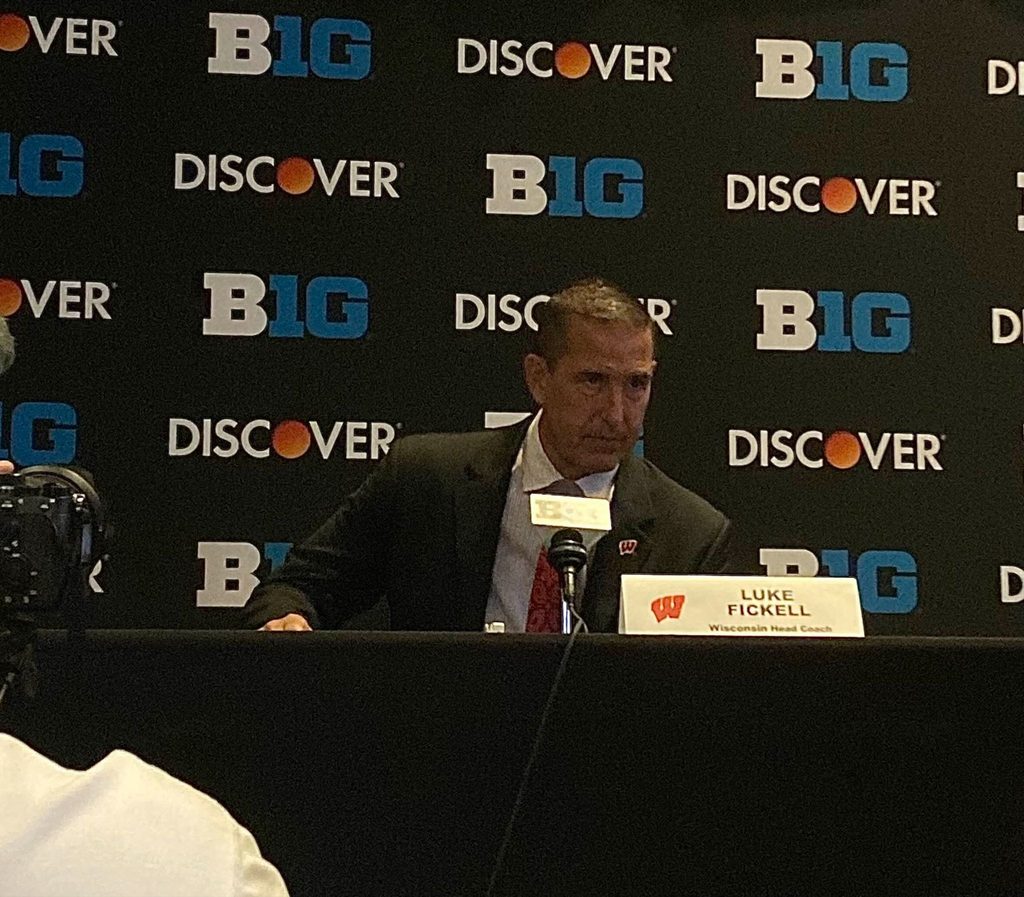
Those three words—tough, nasty and disciplined—have become the defining message of Wisconsin’s offseason.
But in 2026, words alone will not be enough.
Rebuilding the culture
Wisconsin has taken a hard look at nearly every aspect of the football program in the off-season:
“The last eight, nine months, we’ve taken a deep dive into all things we’ve done within our program,” Fickell said. “We’ve had some critical injuries that have caused us some issues. We’ve taken a hard look at the way we train, the way we practiced: spring ball, fall camp, how we practice as we get into the season.”
Wisconsin cannot simply expect different results while doing everything the same way.
Fickell pointed to injuries, training and practice methods as areas the program has evaluated while attempting to adapt to the changing demands of modern college football. The result, according to Fickell, is a different atmosphere within the program.
“It’s a different group,” Fickell said. “There’s a different vibe.”
Senior safety Matthew Jung echoed that sentiment.
“The new guys didn’t come to Wisconsin to not win games,” Jung said. “They came here to bring back the winning culture in Wisconsin.”
That winning mentality is exactly what Fickell is trying to restore before his seat gets any hotter.
For the first time during Fickell’s tenure, the university appears to be reshaping the infrastructure around the program as well.
A $285 million investment
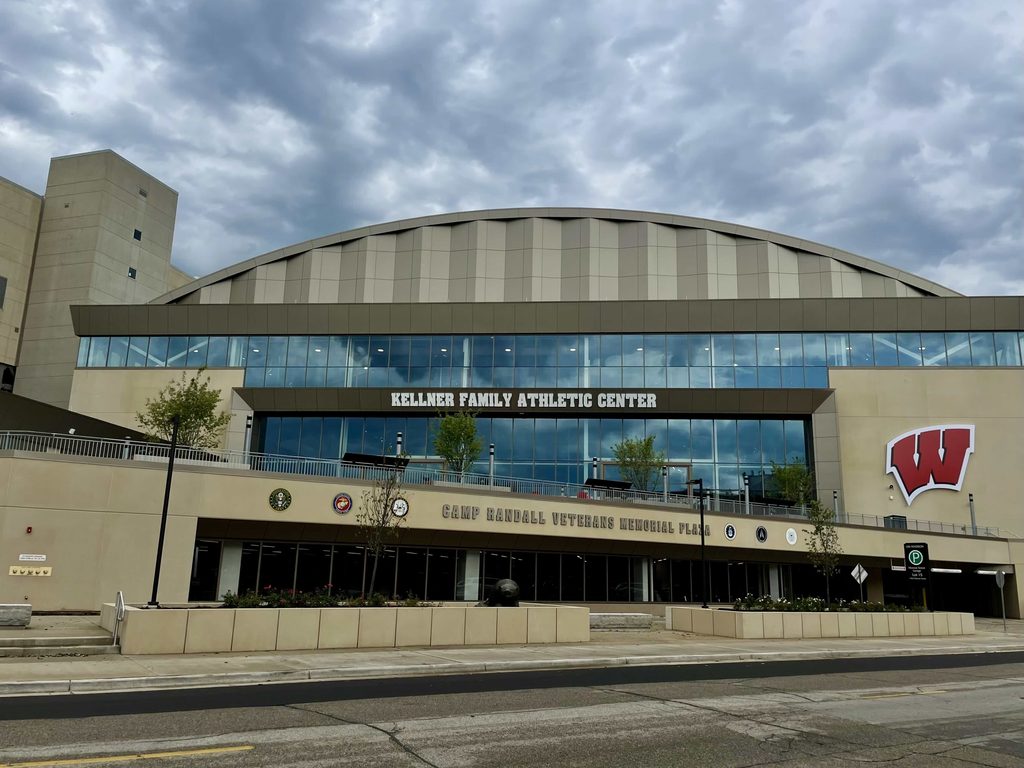
The first phase of the Kellner Family Athletic Center opened this summer next to Camp Randall Stadium, providing Wisconsin football with a new primary indoor practice facility.
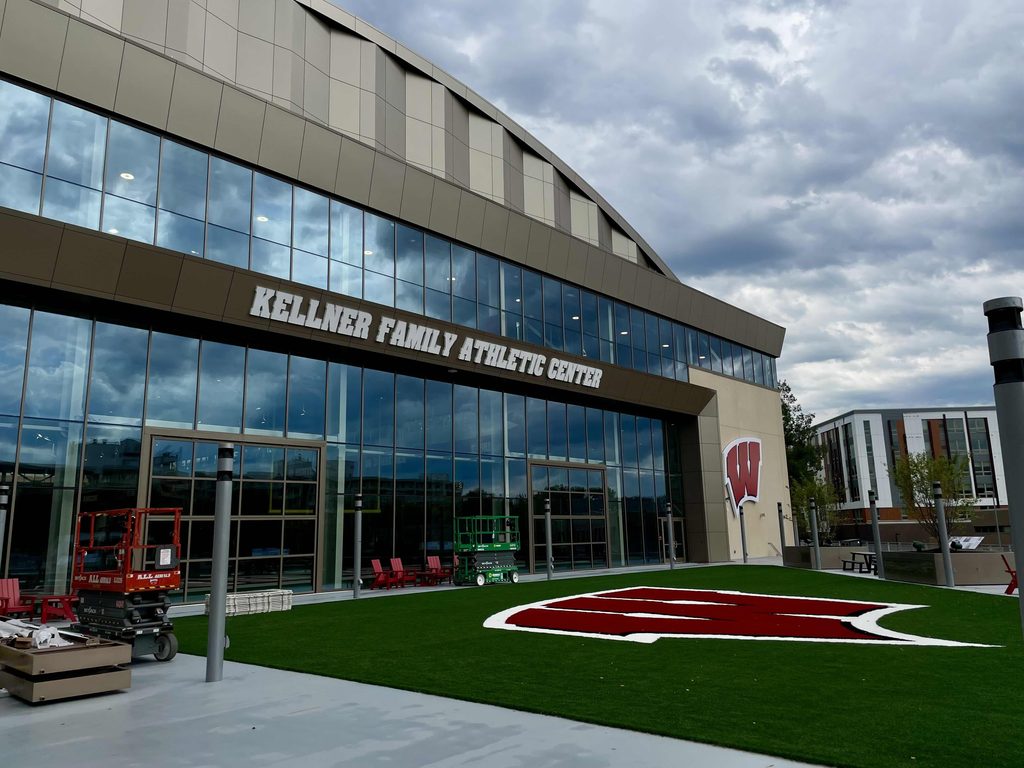
The project represents the largest capital project in Wisconsin Athletics history, with a total cost of $285 million.
The new center will feature a 120-yard indoor turf field, a strength and conditioning center, a 305-meter training track, a student-athlete dining hall, sports medicine facilities, locker rooms, coaching offices and student-athlete well-being spaces.
All 23 of Wisconsin’s varsity sports are expected to utilize the facility.
The project is more than an upgrade to the Badgers’ practice space. In modern college athletics, facilities are also part of recruiting and retention.
Wisconsin can no longer rely solely on its history and tradition to attract elite talent. Programs across the Big Ten are spending heavily on facilities, recruiting and player compensation.
The Kellner Family Athletic Center is Wisconsin’s attempt to keep pace. It is a public commitment to the future of Badger athletics.
The university has also received help through another controversial development in the rapidly changing financial landscape of college sports.
Public funds and the Name, Image, Likeness (NIL) arms race
Wisconsin Governor Tony Evers signed Assembly Bill 1034 in April 2026, allocating $14.6 million annually in state taxpayer funds to help alleviate UW-Madison’s athletic facilities debt.
The money does not directly pay Wisconsin football players.
However, the funding is designed to target existing athletic debt obligations, thereby freeing resources within the athletic department at a time when schools are expected to spend millions of dollars directly on athletes through revenue-sharing agreements, demonstrating careful navigation of the increasingly competitive NIL landscape.
Wisconsin’s athletic department has historically been largely self-supporting. But college sports have changed.
The rise of NIL, unrestricted player movement and revenue sharing has created a financial arms race unlike anything the sport has seen.
For Wisconsin, the state funding provides additional flexibility.
Critics have questioned whether taxpayer money should be used to help an athletic department remain competitive in an era of multimillion-dollar player compensation.
Supporters, however, argue that the funding protects Wisconsin’s broader athletic department, including Olympic and women’s sports, while allowing the university to compete with schools spending aggressively in the NIL marketplace.
The investment comes as Wisconsin continues to carry significant athletic facilities debt, including the cost of projects such as the new Kellner Family Athletic Center.
In other words, the funding does not suddenly give Wisconsin a blank check for NIL. By reducing financial pressure in one area, the university gains greater flexibility in another.
For a program attempting to catch up in the new world of college football, that flexibility could be crucial.
New leadership, new expectations
The Badgers also enter 2026 with new leadership beyond the football program.
Dr. Eric Wilcots is serving as Wisconsin’s interim chancellor, while Shawn Eichorst has taken over as the university’s new athletic director.
Fickell praised Wilcots’ leadership during the transition and said he is looking forward to building his relationship with Eichorst.
“I’ve enjoyed getting to know him a little bit,” Fickell said. “Happy and excited to build our relationship and move this thing forward with him as well.”
The timing could not be more important.
Wisconsin is attempting to navigate one of the most consequential periods in modern college athletics while simultaneously rebuilding one of the Big Ten’s most recognizable football programs.
The Badgers have a new athletic director, a new indoor facility, new financial flexibility and a roster filled with transfer additions.
Now, Fickell has to make it work.
Wisconsin does not necessarily need to compete for a Big Ten championship in 2026 to show progress.
Fickell has acknowledged the failures of the past two seasons. He’s changed how the program trains and practices and embraced the transfer portal. Wisconsin has invested hundreds of millions into facilities and gained additional financial flexibility as the NIL era reshapes college athletics. Now it’s time to show that the investments being made around the program are translating into results on the field.
The excuses are beginning to disappear.
Now it’s time to produce.
Wisconsin is betting that a different quarterback, a deeper transfer class, a renewed commitment to physicality and unprecedented institutional investment can help return the Badgers to relevance.

