





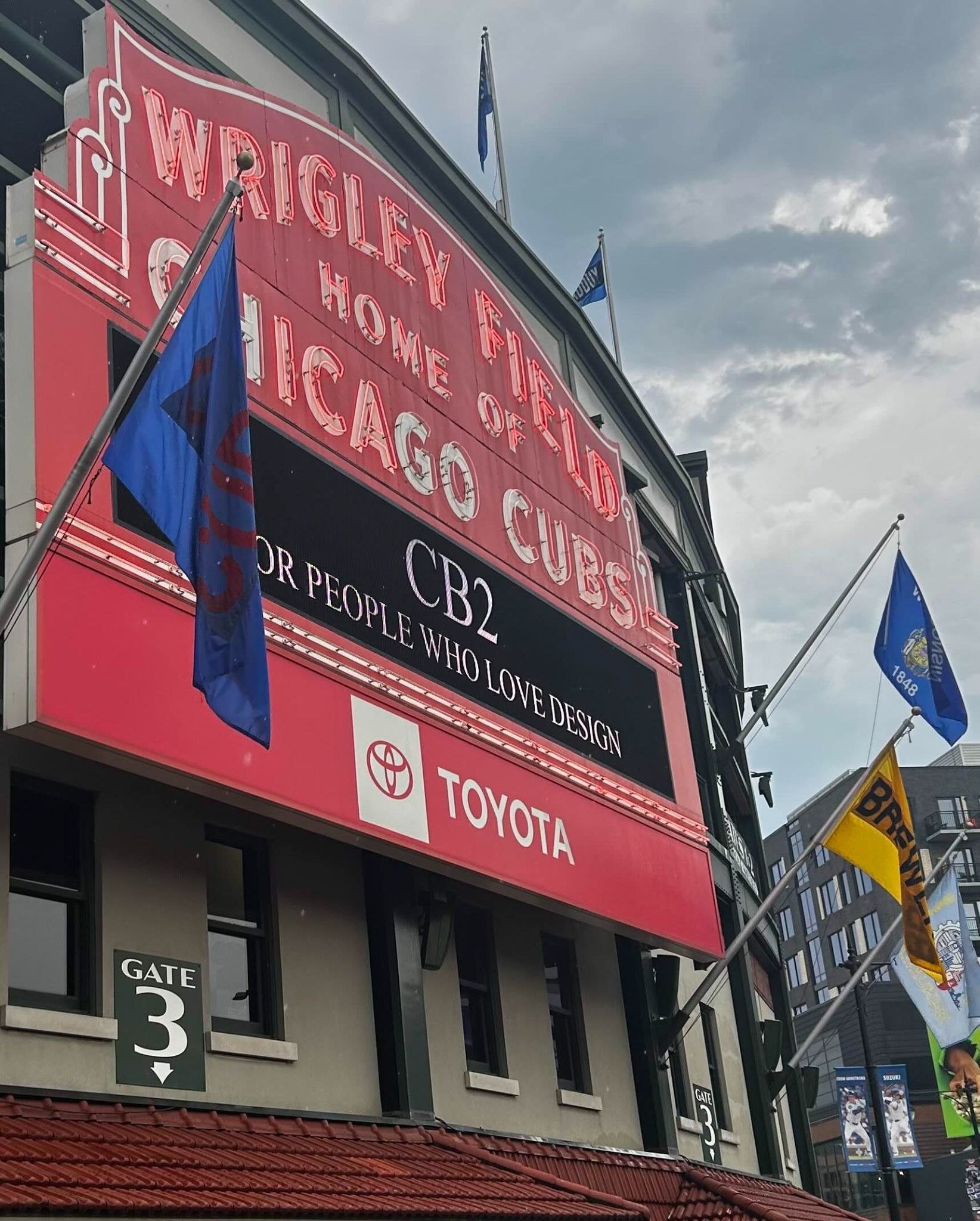
CHICAGO—Two weeks ago, the Chicago Cubs were just three games back of the Milwaukee Brewers and firmly in command of the first National League Wild Card spot.
Now, eight games behind their division rivals and even with Philadelphia for the first NL Wild Card, the Cubs have seven opportunities in 10 days to change the trajectory of the NL Central race.
It starts Monday night at Wrigley Field, where the Brewers will begin a four-game series against the Cubs before the two teams travel to Milwaukee for a three-game set beginning Sept. 7.
There isn’t a more important stretch remaining for either team.
“They’re going to be fun games,” said right fielder Ian Happ. “When we’ve met over the past few years, they’ve been big games in terms of the division and close contests. So it should be a really fun four days at Wrigley.”
The Brewers enter the series with an 85-52 record, owning the best record in the National League and an eight-game lead over the 77-60 Chicago Cubs. Milwaukee has also gone 7-3 over its last 10 games, while Chicago has gone 3-7.
The Cubs have watched their division deficit balloon after a disastrous stretch that began on the road.
Chicago went 2-4 against the Seattle Mariners and Arizona Diamondbacks before returning home and dropping two of three to the Cincinnati Reds. Sunday’s 7-5 loss to Cincinnati was especially costly, as the Reds hit four home runs and Shota Imanaga surrendered six earned runs over five innings. Imanaga allowed three home runs on the night, pushing his season homer total to a career high 33. Imanaga has now allowed 91 home runs in three seasons for Chicago.
The Cubs pitching staff has been defined by injuries to the starting rotation and an alarming number of home runs allowed. The starting pitching hasn’t been the biggest problem during this recent slide.
The back end of the bullpen blowing games late has become an all-too-familiar storyline.
That leaves little margin for error against a Brewers team that has spent much of the season finding ways to win close games and now has a chance to all but shut the door on Chicago’s hopes of winning the division.
A daunting matchup
One of the biggest challenges for the Cubs will be facing the likes of Jacob Misiorowski and Logan Henderson twice during the seven-game stretch.
Misiorowski has established himself as one, if not the most dominant pitcher in baseball, entering the series with a 1.73 ERA and a 14-5 record. He is scheduled to start Wednesday at Wrigley before facing Chicago again Sept. 8 in Milwaukee. The flamethrower leads the majors with 222 strikeouts and has allowed two or fewer runs in 19 of his 25 starts. In two appearances against the Cubs, Misiorowski logged 12 innings pitched, one earned run, five walks and 16 strikeouts.
Henderson is also sporting a stellar season with a 2.48 ERA and a 9-2 record. He has gone at least six innings in all of his last five starts. The Cubs will face off against Henderson in the series finale on Thursday and Sept. 9 in Milwaukee.
The Cubs will need to find a way to manufacture runs against a pitcher who has already given them problems this season. Misiorowski struck out 10 Cubs over six innings in Milwaukee’s 6-2 victory June 27, including a pitch that reached 105.5 mph.
If the Cubs can take a couple games in Chicago, they can put the pressure back on Milwaukee before the two teams meet again in Wisconsin.
If the Brewers leave Chicago with a commanding lead, however, the division race could effectively be decided.
Clay Holmes faces Kyle Harrison for the series opener Monday.
Holmes has been the reliable starter the Cubs were desperately searching for at the deadline. Pitching to a 1-2 record with a 1.96 ERA for the Cubs, Holmes has done a great job inducing ground balls, only allowing one home run and five earned runs over 23 innings pitched.
Kyle Harrison looked like an NL Cy Young frontrunner before going down with left elbow soreness/forearm tightness, ultimately landing on the injured list July 11. Since returning to the bump Aug. 5, Harrison has gone 2-1 with a 1.83 ERA and 26 strikeouts. Against the Cubs, Harrison has pitched 12 innings in two starts, giving up two runs, two walks and 20 strikeouts.
Without their A-level defense (Gold Glove shortstop Dansby Swanson absent with an oblique injury), the Cubs will have to keep Milwaukee’s speedy, small-ball offense off the base paths, while ground-ball maestro Clay Holmes looks to keep the Brewers’ bats at bay.
Barring a monumental Brewers collapse, the North Siders will need to capitalize early in the series off Kyle Harrison and Robert Gasser if they want any chance of reeling in a Brewers team on pace for 100+ wins.
The Cubs are 6-10 since Aug. 13, and the bullpen has gone from a strength that kept them afloat to a major question mark. Ryan Rolison, Javier Assad, Shota Imanaga and Jacob Webb helped stabilize the pitching staff during the early portion of the season, while Trent Thornton provided another reliable option. But after Chicago added three pitchers at the trade deadline and welcomed Daniel Palencia back from injury, the reinforcements have yet to provide the expected boost, except for Clay Holmes.
Holmes has been everything the Cubs hope for; the rest of the additions have struggled. Kevin Gausman is 3-1 with a 5.14 ERA in 28 innings, allowing 16 earned runs and five home runs. Ryan Zeferjahn has a 5.79 ERA in 9 ⅓ innings, while Palencia has allowed four earned runs in just 2 ⅔ innings for a 13.50 ERA since returning.
The once reliable back end of the bullpen, consisting of Webb, Rolison, Thornton, and Caleb Thielbar, has struggled mightily down the stretch. Webb gave up three runs against the Seattle Mariners on Aug. 22 and two more against the Arizona Diamondbacks on Aug. 25, blowing leads in high-leverage situations in both games. Thornton, who had a 1.98 ERA in May, now has a 3.45 ERA after a rocky August in which he posted a 4.63 ERA. That includes back-to-back rough outings against the Cincinnati Reds, giving up five runs on Friday and a run on Sunday. Veteran lefty Caleb Thielbar has also had a rough month, posting an 8.31 ERA in August, allowing eight runs in 8.2 innings.
“Ultimately, every reliever goes through stretches where they’re going to get scored upon, and maybe they’re not going to pitch well and make mistakes,” said manager Craig Counsell. “The best thing we can do is get them back out there.”
There is little time for the Cubs’ bullpen to find its footing. Chicago has a chance to erase a significant portion of the Brewers’ eight-game division lead, but doing so will require the pitching staff to hold leads when they matter most. Milwaukee’s relentless, contact-oriented offense puts constant pressure on opposing defense, making every late-inning mistake magnified.
Seven games, one opportunity
The Cubs’ offense has continued to give the team a chance despite the recent struggles.
Chicago leads the MLB with 725 runs and has received another historic stretch from Pete Crow-Armstrong, who hit his 38th home run Sunday and homered twice in the previous game. Against the Brewers this year, Crow-Armstrong is hitting .048 (1-21) with four walks and 12 strikeouts. In his career, the Cubs’ leadoff hitter is batting a measly .160 (15-94), with 11 walks, 31 strikeouts, 12 RBI, three doubles and five home runs.
The Cubs boast a +127 run differential, better than any team in the American League and third in baseball behind the Milwaukee Brewers (+177) and the Los Angeles Dodgers (+153).
But the offensive production alone will not be enough.
The Cubs need their starting pitchers to continue giving them length, their bullpen to protect leads and their lineup to capitalize when opportunities arise.
Most importantly, the North Siders need to win games against the team standing directly in their way.
“We get 13 chances to play the Brewers, and then other than that we don’t have any control over the Brewers,” said Counsell. “They’ve got to go play their games and we have to go play ours. They’re on pace for a big number, over a 100-win pace. That’s hard to keep up with. Go ask the rest of major league baseball; that’s hard to keep up with. They’re having a fabulous season. We’re not going to be a 100-win team, but we’re still a really good team.”
Seven games against Milwaukee in 10 days will allow the Cubs to erase a significant portion of their eight-game deficit.
It will also allow the Brewers to bury their biggest division challenger.
After spending a majority of the season battling for the top spot in the NL Central, the Cubs have reached the point where there is no longer room to wait for things to turn around.
The 25-game stretch that’ll define the 2026 NL Central begins now.

