






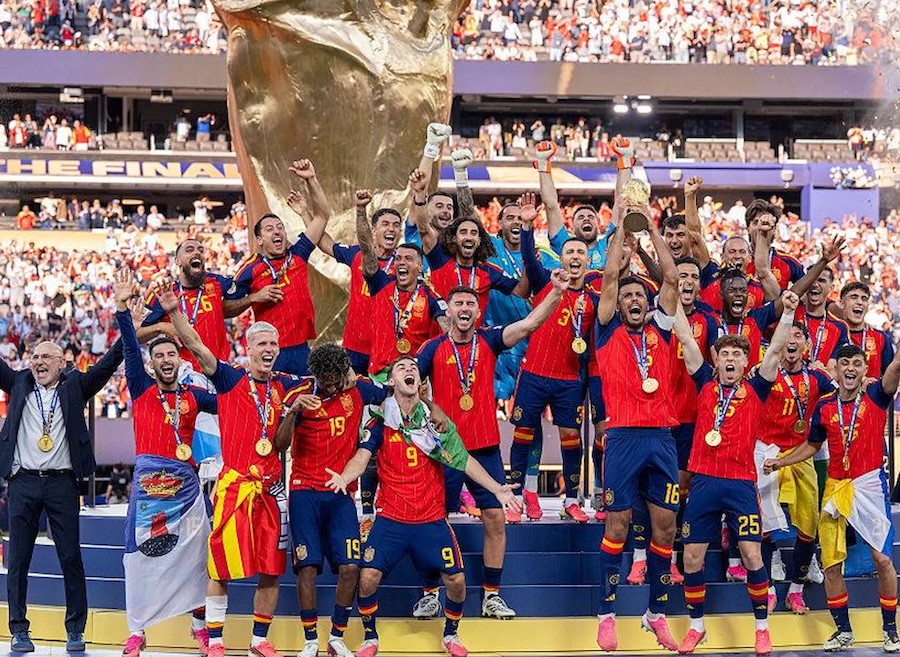
From the Azteca in 1970 to all 104 matches this summer, one writer’s long view of the tournament that broke every record.
I didn’t come to this game late. I grew up on it, in Mexico City, where my family was living during the 1970 World Cup. That was Pelé’s Brazil, a team considered one of the greatest ever, lifting the trophy at the Azteca. You don’t forget a thing like that. It wires the sport into you for life.
By 1994 the World Cup had come to the States, with the opening match right here in Chicago. I lucky enough to be down in Orlando that summer and walked up and bought a ticket practically on the spot to watch the Netherlands beat Ireland 2-0 at the Citrus Bowl in the Round of 16, the afternoon that ended Jack Charlton’s plucky Irish run. That tournament set an attendance record, 3,587,538 fans, that stood for 32 years. I couldn’t wait to see a soccer summer like it again.
This year, that record wasn’t just broken. It was smashed. No chance of walking up for a ticket in 2026, though. Prices ran into fantasy money, and with no games anywhere near Chicago, the days of strolling up to a box office and grabbing a seat on a whim are gone. So I did the next best thing. I watched all or part of every single match from my own living room, and let me tell you, it was a heck of a way to spend a summer. I got off the couch a couple of times, too, heading to a pair of outdoor watch parties right here in Lake Bluff to pull for Team USA with the neighbors. There is nothing quite like a crowd of people out under a summer sky, roaring at the same screen. We cheered the Americans past Bosnia and Herzegovina, hanging on for a 2-0 win in the round of 32, despite the loss of red carded Folarin Balogun. Then watched them bow out 4-1 to Belgium in the round of 16, despite a controversial reprieve that allowed Balogun to play. Same old story, out in the last sixteen to a European side, but for one summer evening it sure was fun to hope. The Americans still have to up their game to play at the same level as the best European and South American teams.
Speaking of teams, the 2026 World Cup tournament was the first ever with 48 teams, up from 32, producing 104 matches, 40 more than Qatar staged in 2022, across 16 cities in the United States, Mexico, and Canada. More than 6.5 million fans passed through the turnstiles, outdrawing the 2018 and 2022 World Cups combined with matches to spare, at 99.7 percent capacity. The rest of the continent more than filled the void Chicago left behind.
And it turns out I had plenty of company on the couch. The final between Spain and Argentina became the most-watched soccer match in American history, drawing a combined 62.8 million viewers across Fox and Telemundo, with Fox’s English broadcast alone peaking near 51.7 million. Fox averaged 7.74 million across the whole tournament, up a staggering 116 percent from Qatar in 2022.
The 48-team question, answered
Plenty of fans and media grumbled when FIFA announced the expansion. Forty-eight teams sounded like a money grab that would water down the competition. Simply put, we were wrong. The old “fear factor” that once paralyzed small nations against the giants was gone, and the group stage produced more draws than any World Cup since 1958. Not the boring kind, either. These were players digging in and refusing to give up, even when facing some of the top teams.
Africa’s summer
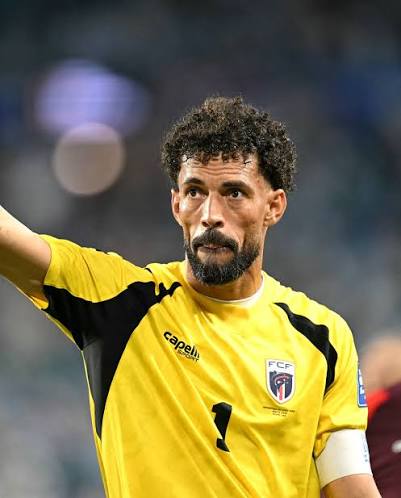
Nowhere was that clearer than with the African participants, which sent ten teams and got nine of them into the knockout round, with only Tunisia failing to advance. Four nations reached the knockouts for the first time in their history, among them Ivory Coast, DR Congo, South Africa, and the little island that stole the show, Cabo Verde. A country of half a million people, making its debut, held Spain to a scoreless draw and then pushed defending champion Argentina to extra time before losing 3-2. DR Congo notched the first World Cup win in their history. Only Morocco reached the quarterfinals, not quite stunning as their semifinal appearance in 2022, but the message was unmistakable. The gap has closed.
The even bigger shocks
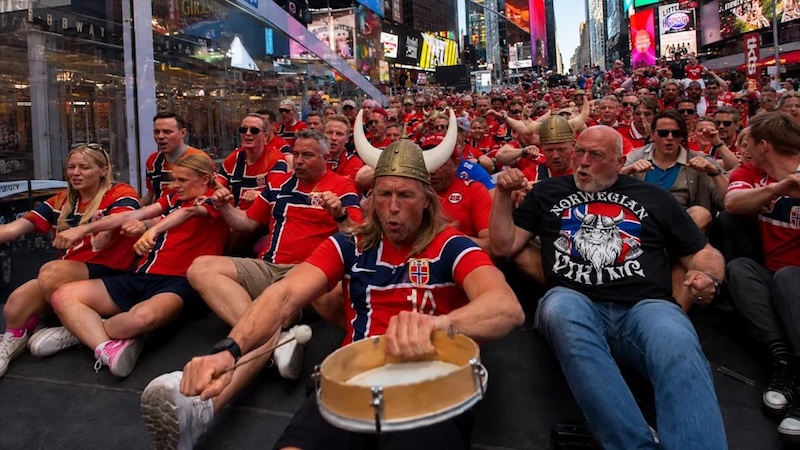
If Africa was the headline, it wasn’t the only story. Norway returned to the 2026 World Cup for the first time since 1998, a 28-year exile, and with Premier League standouts Erling Haaland and Martin Ødegaard leading the charge, they made a huge splash. They also brought the summer’s best party, the “Viking Row,” a synchronized celebration where players and fans sit shoulder to shoulder and heave on imaginary oars to a pounding drumbeat, bellowing “row!” on every stroke. It went from the stadiums into Times Square and the New York subway, the tournament’s first great fan craze and a cousin to Iceland’s Viking Clap. Elsewhere, Paraguay bounced Germany on penalties, and little Curaçao, the smallest nation ever to qualify at just 156,000 people, saw goalkeeper Eloy Room make 15 saves against Ecuador to equal Tim Howard’s World Cup record and earn his country its first-ever point.
The hydration-break headache
Not everything was a triumph. The most tiresome storyline had nothing to do with the football. For the first time, FIFA mandated three-minute “hydration breaks” at the 22-minute mark of each half, in all 104 matches, regardless of temperature or whether the roof was closed. Just about everybody hated it. The breaks turned two halves into four quarters and chopped up the flow of the game. U.S. coach Mauricio Pochettino put it plainly, “I don’t like it.” And plenty noticed the extra pauses handed FIFA’s broadcasters a fresh pile of ad inventory. Some U.S. venues were genuinely brutal, pushing 90-plus degrees, and the safety argument is real. But nobody minded a water break in a Kansas City, Miami, or New Jersey. They minded being told to take one inside a climate-controlled dome.
The best game wasn’t the final
Here’s the strange part. The most thrilling match of the tournament may have been the one nobody’s supposed to care about. In Saturday’s third-place playoff in Miami, England raced to a 4-0 halftime lead over France, only for Kylian Mbappé to drag Les Bleus roaring back, his two goals moving him past Messi as the all-time leading scorer in World Cup history. France clawed within a single goal before Bukayo Saka completed his hat-trick from the spot. Final score 6-4, England, the most goals in a World Cup match since 1982 and England’s best finish since 1966. If only the final had been half as much fun.
One familiar ending
For all the chaos, the trophy landed in familiar-looking hands. Spain, already the European champions, ground out a 1-0 win over Argentina before 80,663 at MetLife Stadium, a defensive see-saw in which Spain controlled the game flow, scored a single goal in an affair that never caught fire the way Saturday’s bronze final had. Substitute Ferran Torres scored moments into extra time, Argentina played the whole extra period a man down after Enzo Fernández’s second yellow, and Emiliano Martínez did everything humanly possible with a record 11 saves. But Spain conceded exactly one goal all tournament. That’s a champion.
Forty-eight teams. One hundred and four matches. Six and a half million fans. A pack of underdogs who refused to know their place. Say what you want about the format. The 2026 World Cup delivered.

