





There is no substitute for being there.
I’ve watched plenty of NCAA Tournament basketball on television over the years, and it’s a perfectly fine way to consume March Madness. But I’ve also been fortunate enough to watch it in person, first as a student at the University of North Carolina, then as a fan, and on several occasions as a reporter. As a Tar Heel student in 1982, I was in the stands for the second round win over James Madison and the Regional final against Villanova, part of the championship run that ended with Michael Jordan’s famous shot against Georgetown. I watched that final on television like everyone else, but I’d seen enough of that team up close to know what they were capable of.
The 2005 championship in St. Louis, when the Tar Heels defeated Illinois, was the best I’ve seen in person. And when the bracket sent me back to the Gateway to the West for the first and second rounds this year, it felt less like an assignment and more like a homecoming.
2026 NCAA Tournament First and Second Rounds: Back in St. Louis
The atmosphere at a first-round NCAA venue is its own kind of electricity. Eight teams, four games, fans from schools you’d never normally see in the same building, all jammed in together with zero idea how the day is going to unfold. That unpredictability is the whole point. And this year, the first weekend delivered in a way I hadn’t seen in years.
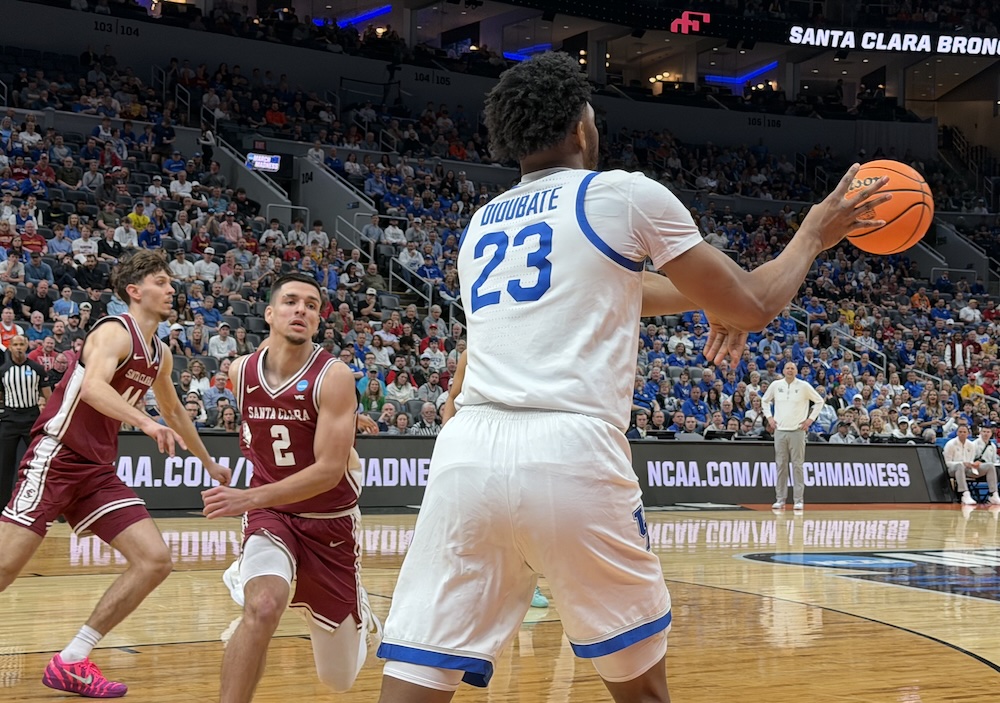
The Best Game of the Tournament: Santa Clara vs. Kentucky Goes to Overtime
Then came Santa Clara and Kentucky.
I was courtside for that one, and the final minute was something I won’t forget for a long time. In the final ten seconds, a layup and two three-point baskets, back to back, sent the game into overtime where Kentucky claimed victory. When you’re sitting that close, you feel the momentum swings physically. The crowd noise hits you differently. It was the kind of game that reminds you why the first weekend of the tournament is appointment basketball, every single year.
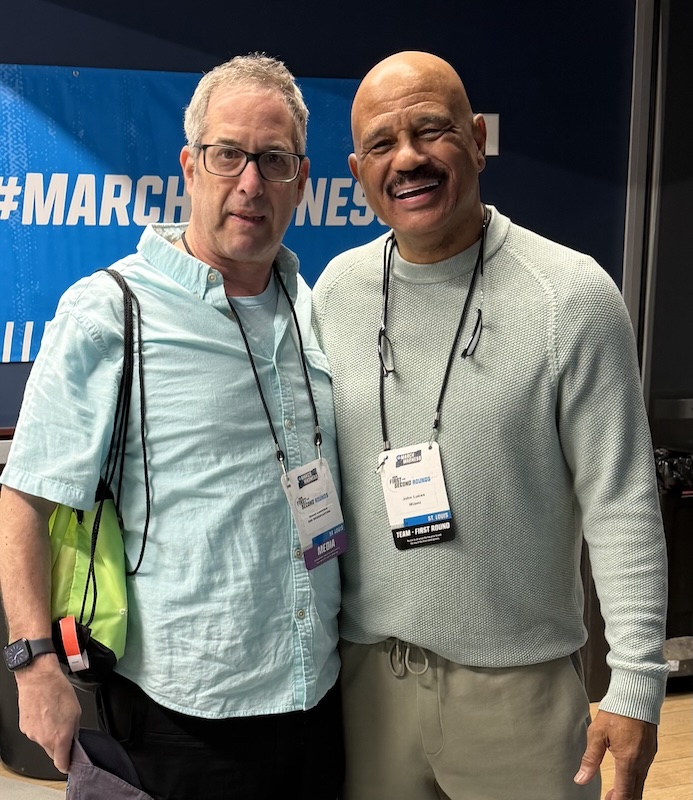
Meeting John Lucas: Maryland Legend and Basketball Royalty
St. Louis also gave me one of those unexpected hallway moments that only happen at live events. I had the chance to meet John Lucas, the former Maryland Terrapin who was a standout in both basketball and tennis for the Terps before becoming a first-round NBA pick. His son is the head coach at Miami, and John could not have been more gracious. I whispered in his ear that I recall how the Maryland – NC State rivalry in the mid-seventies far outpaced the UNC – Duke rivalry that is ubiquitous today. He chuckled and had me repeat it for the benefit of one of the Miami assistant coaches that was accompanying him. We also chatted about the tournament, about the state of college basketball before using up my one to two minutes for stepping into a celebs personal space.
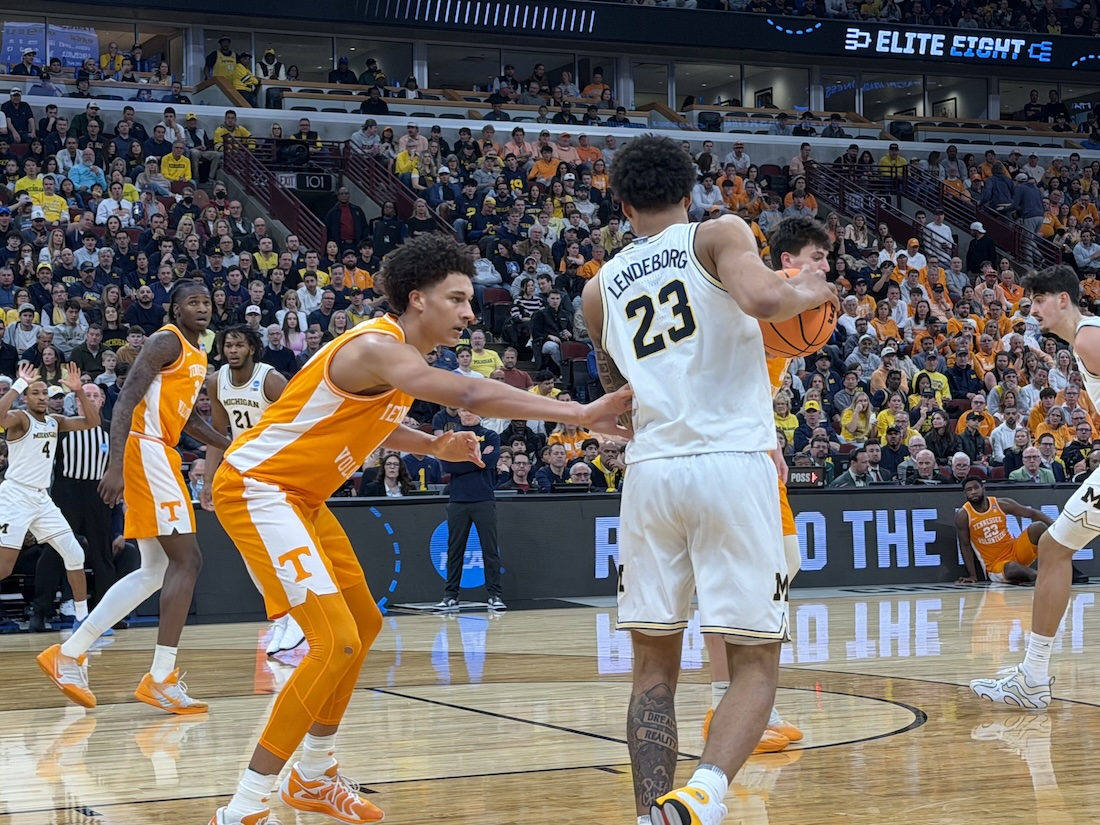
Michigan Wolverines in Chicago: Elliott Cadeau and a Carolina Connection
The following weekend, my attention shifted north to Chicago, where Michigan was making a run that had a profound interest for me. The Wolverines’ point guard was Elliott Cadeau, who spent two years was running the offense in Chapel Hill as a Tar Heel. As someone who spent his college years at UNC, once the Heels were eliminated I turned my attention to watc Cadeau direct a Michigan team deep into the tournament. The kid can flat-out play. His decision-making, his composure under pressure, you could see why Carolina wanted him in the program, and why Michigan was glad to have him when he came through the transfer portal.
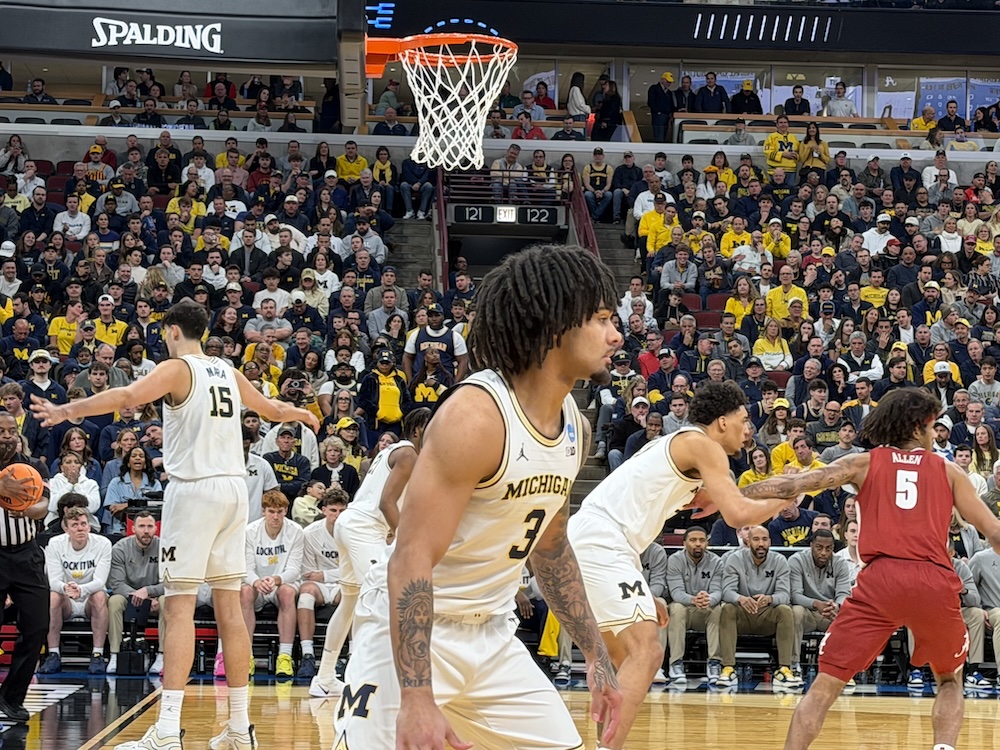
The Transfer Portal Era: Michigan’s All-Portal Roster Is the Future of College Basketball
Which is, of course, the larger story here.
Every single one of Michigan’s starters came through the transfer portal. Not most of them. All of them. Think about what that means for a minute. A national championship team, built from scratch, assembled via a free agents rather than developed through four years of recruiting and traditional player development. Whether you love it or hate it, it is almost certainly a preview of what men’s college basketball is going to look like from here on out. NIL changed the landscape, and the portal changed roster construction permanently.
The Most Impressive Player in the 2026 Tournament: Yaxel Lendeborg
If there was one player in this entire tournament who consistently made my jaw drop, it was Yaxel Lendeborg. His combination of size, athleticism, and court awareness was something to behold up close. On television he’s impressive. In person, he is something else entirely. he can drribble, shoot from the outside, and crash the paint to collect rebounds.
What You Don’t See on TV: The Physical Reality of Courtside NCAA Basketball
Which brings me back to my point about being there.
People who haven’t sat courtside at a college basketball game tend to think of it as a fast, skill-based sport, which it is, but not a particularly physical one. Football has that reputation. When you are mere feet from the action, what you see, hear, and practically feel is a contact sport. The pushing and shoving under the basket. The grunting as bodies fight for position. The coaches, voices raw by halftime, screaming with an intensity that doesn’t always make it through a television microphone.
It’s organized chaos, played at a very high level by very large human beings who want to win very badly.
Michigan Wins the 2026 NCAA Championship
Michigan did exactly that. The Wolverines, assembled from the portal, playing for a coach who believed in the sum of the parts, won it all.
I was in St. Louis the last time a team I cared deeply about won a national title. Twenty-one years later, I was back in the same city when the tournament began, watching a kid who once wore Carolina blue help close it out in Chicago.
The game changes. The memories stack up.
And there is still no substitute for being there.
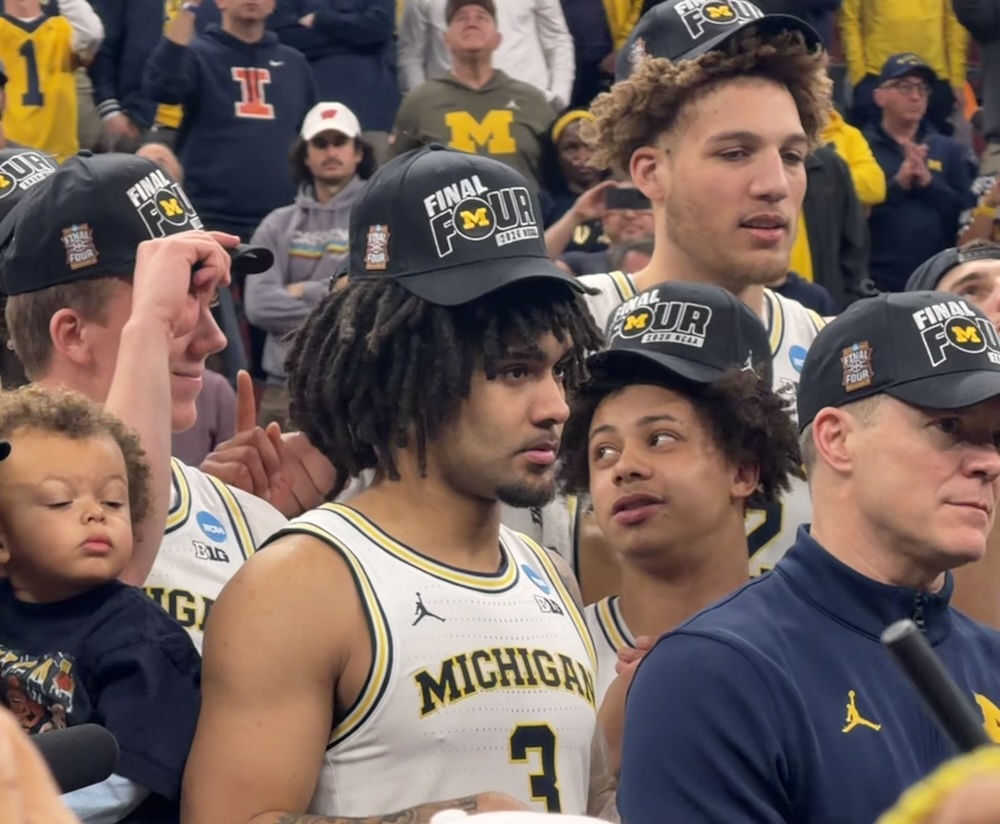
Courtside at the 2026 NCAA Men’s Basketball Tournament, from the Santa Clara-Kentucky double overtime thriller in St. Louis to Michigan’s all-portal championship run in Chicago.

